



Planning STEM enrichment for primary schools can feel overwhelming. There are hundreds of ideas out there, ranging from the genuinely brilliant to the mildly pointless. What you need is a shortlist of activities that are practical, curriculum-linked, and proven to engage children — not just entertain them. Here are ten that work.
1. Robotics Workshops
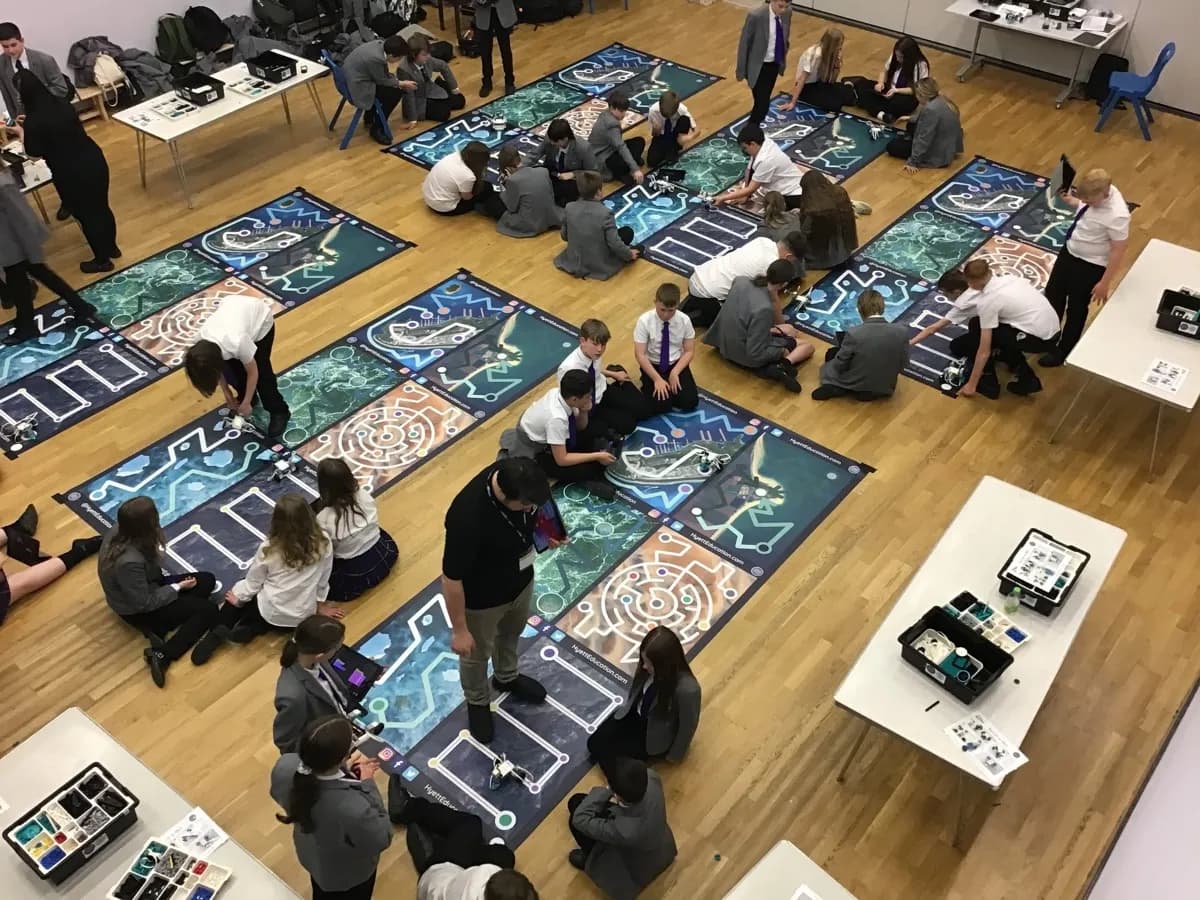
Robotics is one of the most effective ways to bring computing and engineering to life in a primary school. Children build and program physical robots, learning about sequencing, algorithms, and debugging through hands-on experimentation. The immediate feedback loop — your robot either does what you told it to or it doesn’t — makes abstract programming concepts tangible.
Curriculum links: computing (algorithms, programming, debugging), science (forces, motion), design and technology (mechanisms, structures). Our Beginner STEMbotics and Intermediate STEMbotics workshops deliver this in a single day, with all equipment provided.
2. Coding Clubs
A well-run coding club gives children regular, sustained access to programming beyond the computing timetable. The key is structure — a club that drifts into free play on Scratch loses its enrichment value quickly. Use progressive challenges, collaborative projects, and real goals such as creating a game for younger children or building a class website.
Curriculum links: computing (programming, logical reasoning), mathematics (coordinates, geometry through code). For schools that lack staff confidence in this area, our CPD programmes can upskill your club leader.
3. Science Fairs
A school science fair, done properly, develops scientific enquiry skills that a standard lesson rarely has time for. Children formulate hypotheses, design experiments, collect data, and present their findings — the full scientific method, owned by the student from start to finish. The competitive element adds motivation, and the public presentation builds confidence.
Curriculum links: science (working scientifically across all units), mathematics (data handling, measurement), English (explanation and persuasive writing).

4. Eco and Sustainability Projects
Environmental projects connect STEM to issues children genuinely care about. Energy audits of the school building, biodiversity surveys of the grounds, water usage monitoring, or designing solutions to reduce the school’s carbon footprint all involve real data, real science, and real impact. Children can see the results of their work, which gives the learning genuine purpose.
Curriculum links: science (living things, habitats, materials), geography (sustainability, human impact), mathematics (data collection and analysis), PSHE (responsible citizenship).
5. STEM Ambassador Visits
Bringing working scientists, engineers, and technologists into school exposes children to careers and role models they might never otherwise encounter. STEM Ambassadors are volunteers from industry who visit schools to talk about their work and run activities. The impact on children’s aspirations can be significant — particularly for disadvantaged pupils and girls, who benefit from seeing people like them in STEM roles.
Curriculum links: supports cultural capital and careers education, which Ofsted examines under the personal development judgement. Pairs well with a practical workshop on the same day for maximum impact.
6. Astronomy Nights
An evening astronomy event combines science, wonder, and a healthy dose of staying-up-past-bedtime excitement. Even basic stargazing with the naked eye can teach children about constellations, planetary motion, and the scale of the universe. If you can borrow or hire telescopes, the experience becomes genuinely memorable. Time it around a notable astronomical event — a lunar eclipse, a meteor shower, a planetary conjunction — for maximum engagement.
Curriculum links: science (Earth and space, light), mathematics (scale, distance, measurement), computing (planetarium software, data logging).
7. Bridge Building Challenges
Engineering challenges with simple materials — newspaper, straws, lollipop sticks, tape — develop design thinking, structural understanding, and collaborative problem-solving. Bridge building is a classic because it works: the brief is clear (span this gap, hold this weight), the constraints force creativity, and the testing phase provides dramatic, immediate feedback when a bridge holds or collapses.
Curriculum links: design and technology (structures, materials, evaluation), science (forces, properties of materials), mathematics (measurement, weight).
8. Garden Science
A school garden is a living laboratory. Children can design and run genuine experiments — comparing growth rates in different conditions, testing soil pH, monitoring weather data, studying pollination and decomposition. The long-term nature of garden projects teaches patience and the value of sustained observation, which is a different kind of scientific thinking from what a single lesson can develop.
Curriculum links: science (plants, living things, habitats, seasonal change), mathematics (measurement, data over time), geography (weather, climate), PSHE (responsibility, community).

9. Maker Spaces
A maker space is a dedicated area where children can design, build, and tinker with materials and tools. It does not need to be expensive — recycled materials, basic tools, and a culture of experimentation are more important than 3D printers (though those help). The value lies in giving children open-ended creative challenges where the process matters as much as the product.
Curriculum links: design and technology (designing, making, evaluating), science (properties of materials), computing (physical computing with micro:bits or similar), art and design (3D modelling, creative thinking). Our 3D Design and Printing workshop can kickstart a maker space culture with a day of professional CAD and printing.
10. Drone Technology
Drones are one of the most engaging pieces of STEM equipment you can bring into a primary school. Children learn to code autonomous flight paths, understand the physics of flight, and explore real-world applications from agriculture to search and rescue. The combination of coding, engineering, and the sheer spectacle of a drone responding to student-written code creates an experience that children talk about for weeks.
Curriculum links: computing (programming, algorithms, sequencing), science (forces, energy), design and technology (systems, control), mathematics (angles, coordinates, distance). Our STEM Drones workshop delivers all of this in a structured, curriculum-linked session with professional-grade drones and experienced instructors.
Making It Work
The best STEM enrichment programmes do not try to do everything at once. Pick two or three activities that align with your curriculum priorities and your students’ needs, deliver them well, and build from there. A single high-quality robotics workshop will have more lasting impact than five rushed activities crammed into a “STEM week” with no follow-up.
If you are looking for STEM enrichment that is curriculum-linked, fully resourced, and delivered by specialists, our workshop programme covers robotics, drones, AI, cybersecurity, 3D design, and more. Every session is designed to extend the national curriculum and give children experiences they could not get from a textbook.
Frequently Asked Questions
What STEM enrichment activities work best for primary schools?
The most effective activities combine hands-on learning with curriculum links. Top options include robotics workshops, coding clubs, science fairs, eco projects, bridge building challenges, and maker spaces. The key is choosing activities that are inclusive, curriculum-aligned, and deliver lasting impact rather than one-off entertainment.
How do you plan STEM enrichment on a limited budget?
Focus on activities that reach the most students per pound spent. In-school workshops are more cost-effective than trips. Combine Pupil Premium funding with school budget allocation. Use PTFA fundraising for equipment that can be reused. Consider funded programmes through partnerships with the RAF or Defence Nuclear Enterprise.
What makes STEM enrichment different from a science show?
Effective STEM enrichment is hands-on, curriculum-aligned, and produces lasting learning. Students do the work rather than watching a demonstration. Activities link to specific curriculum objectives, and schools receive follow-on resources to continue the learning after the event.