
Named on the RAF STEM Services Framework, 2023 to 2028.
Devon · UK-Wide Delivery
STEM Workshops in Exeter
Hands-on STEM workshops delivered directly to your school, in Exeter and across Devon, with the relevant specialist equipment provided.
Exeter area: £697 to £847 per day, excluding VATSee your exact price
 RAF STEM Education PartnerNamed on the RAF STEM Services Framework, 2023 to 2028
STEM Workshops Across the Exeter Travel Catchment
Hyett Education delivers hands-on STEM workshops to schools in Exeter and across Devon. Each selected workshop identifies product-specific curriculum links, and the specialist equipment specified for the quoted format is provided. The school provides the agreed space and retains its normal on-site duties.
Enhanced DBS, continuously monitored
Every Hyett Education instructor holds an enhanced DBS certificate and is registered on the DBS Update Service. Your instructor's DBS details are shared in your secure booking portal once your booking is made.
Our Workshops
Workshops available across the Exeter catchment
Each workshop identifies relevant curriculum links, and the specialist equipment for the quoted format is provided.

Early Engineers Express
A play-based EYFS and KS1 engineering workshop using LEGO Duplo trains. Children design, build, and test train tracks, bridges, and stations through hands-on construction challenges.
View Workshop
Beginner STEMbotics: Robotics & Coding
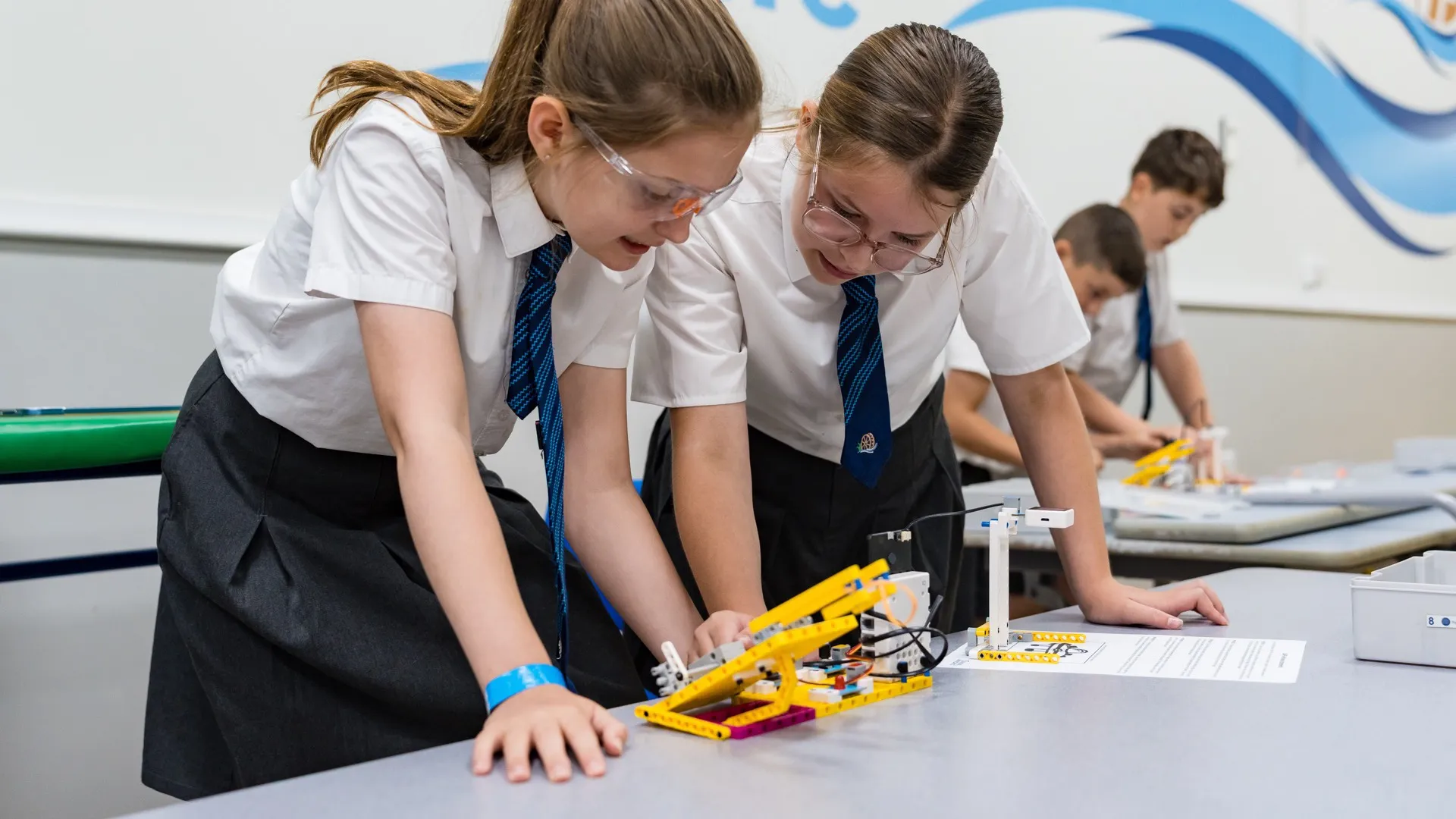
Inclusive robotics and coding workshop for KS1 and KS2 using LEGO Spike Essentials and LEGO WeDo 2.0. Children code with icon blocks or word blocks, and no reading ability is required.
View Workshop
Intermediate STEMbotics: Robotics & Coding
Intermediate robotics workshop for KS2 to KS3. Block-based programming with LEGO Spike Prime and EV3, advanced robot builds, sensors, and challenge mats.
View Workshop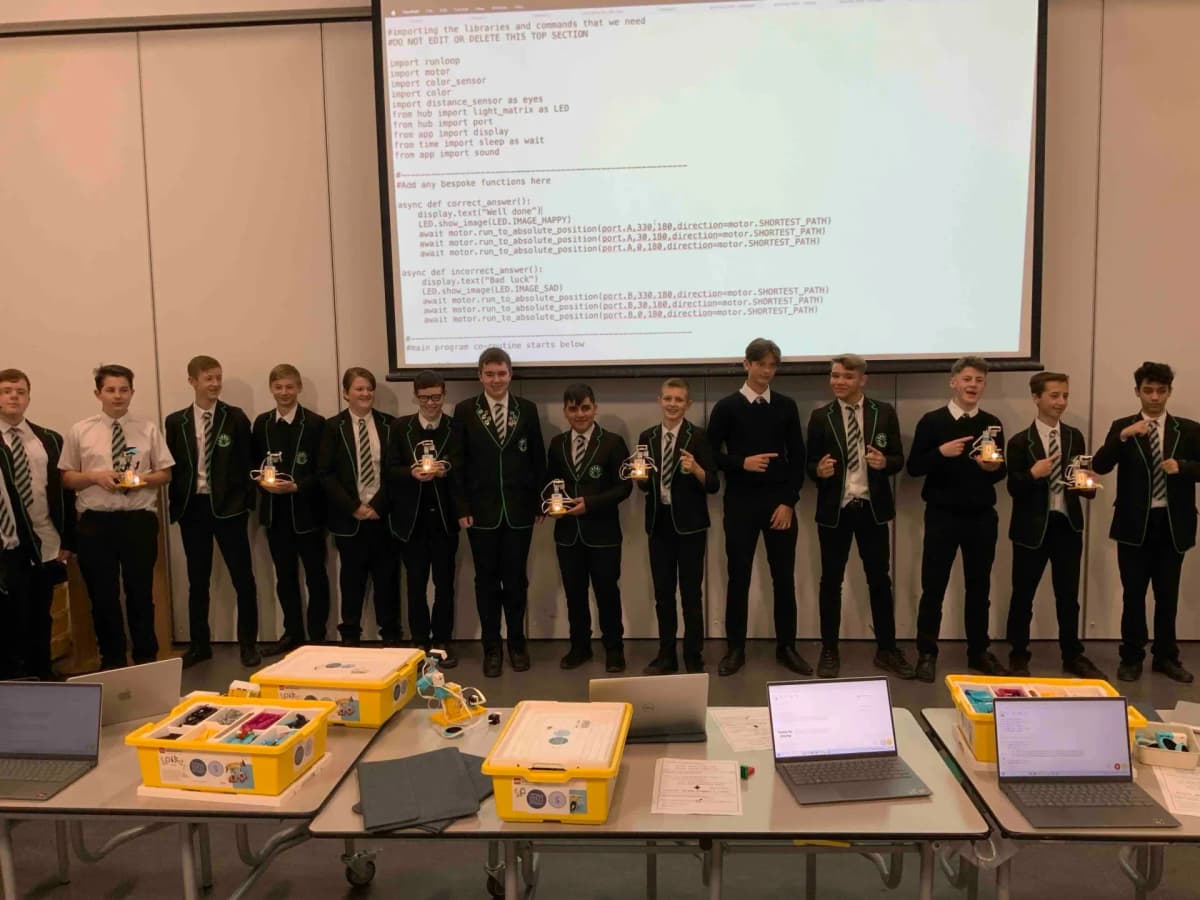
Advanced STEMbotics: Python Robotics
Advanced text-based Python robotics for KS3 to KS5 using LEGO Spike Prime. Real-world engineering applications with up to 30 students per session.
View Workshop
Drone Coding Workshop
Code flight paths and explore aerospace engineering through hands-on drone programming. Up to 30 students per session, with safety eyewear provided for everyone.
View Workshop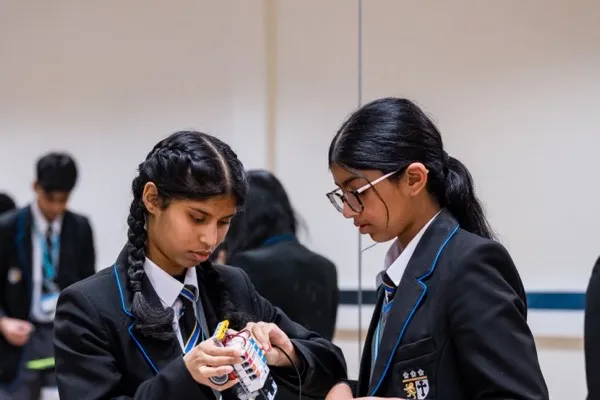
AI Workshop for Schools (KS2-KS4): Train Robots with Machine Learning
Hands-on AI and machine learning for pupils aged 8 to 16, with image-recognition models controlling LEGO robots.
View Workshop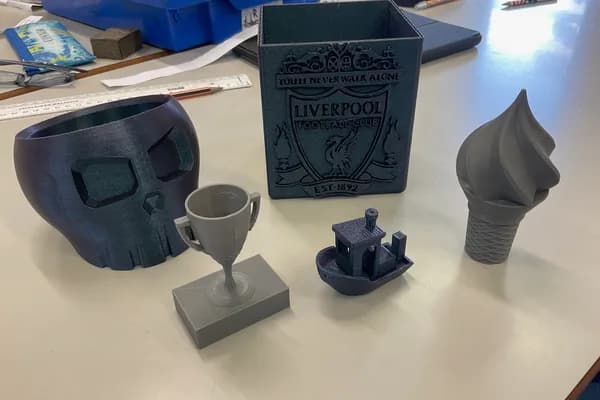
3D Design & CAD Printing Workshop
CAD design and 3D printing workshops combining digital creativity with physical manufacturing.
View Workshop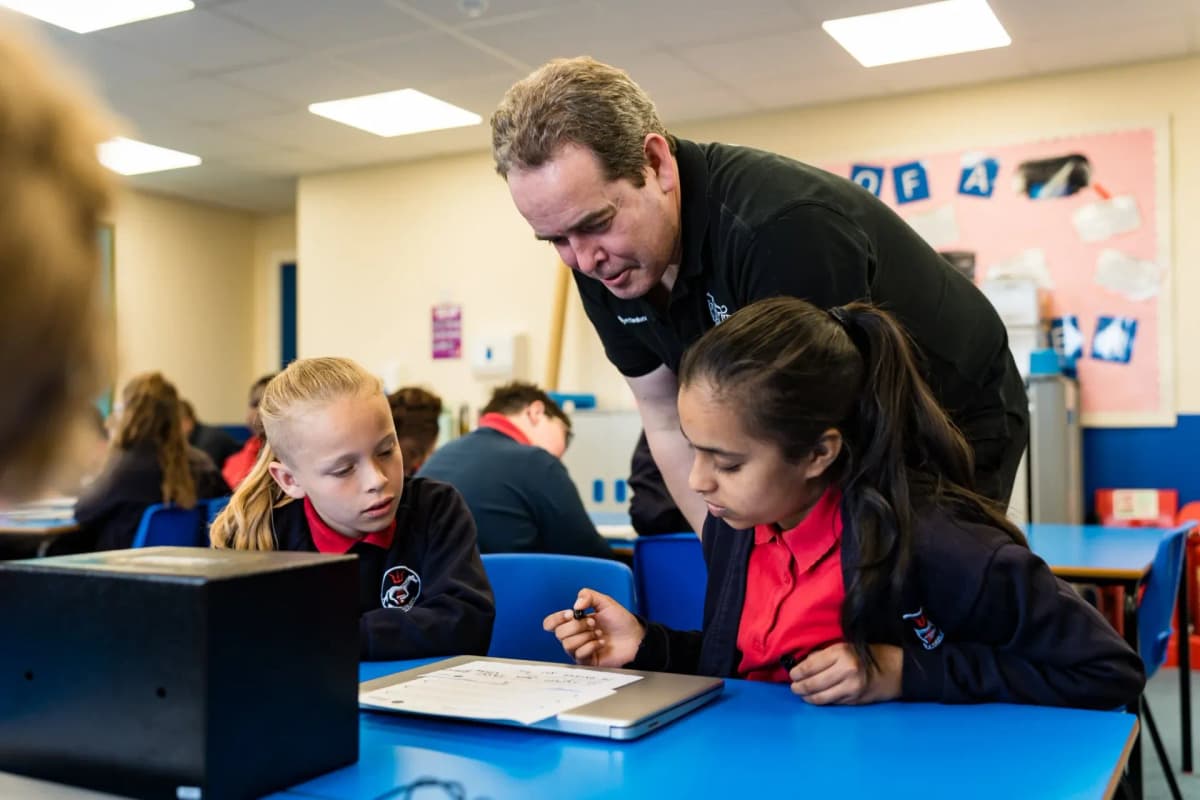
Cybersecurity & Cryptography Workshop
Cryptography, codebreaking, and online safety through engaging, hands-on challenges.
View Workshop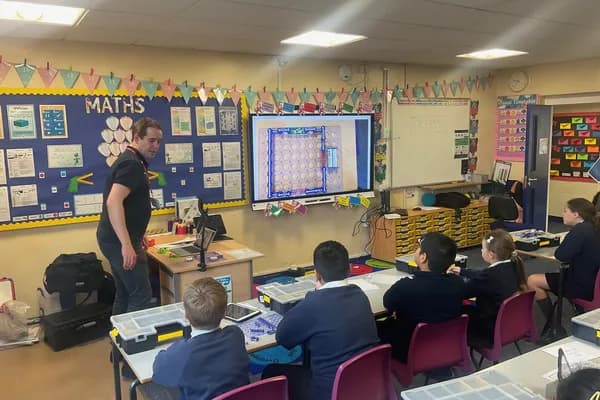
Electricity & Circuits Workshop
Hands-on experiments for Years 2 to 6. Simple series circuits support statutory Year 4 and Year 6 science; Year 2 conductivity is an enrichment application. The in-depth format includes eBook creation.
View Workshop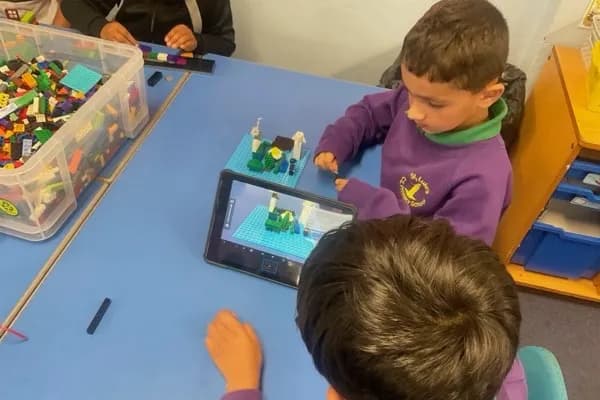
Stop-Motion Animation Workshop for Schools
Create LEGO stop-motion animations using professional techniques. Perfect for KS1 and KS2 creative computing.
View WorkshopSchool Feedback
What Schools Across the Exeter Page Catchment Say
Direct feedback from schools that have hosted our workshops and are mapped to this page's travel catchment.
Resources provided were amazing and it was an experience we couldn't provide within our school curriculum.

Intermediate STEMbotics
Richard was great with the kids (especially a challenging class) and it was clear that he has a teaching background.

Intermediate STEMbotics
The pupils had a wonderful time and to see some of our SEND pupils performing so well, engaging and working as a team was wonderful.

Intermediate STEMbotics
Show all 7 reviews
Excellent exposure to programming and coding for the children.

Intermediate STEMbotics
The instructor was clear, professional and well-mannered with his instructions for staff and children alike.

Intermediate STEMbotics
It really grasped the children's attention and ignited their curiosity for STEM.

Intermediate STEMbotics
The children were so excited and talked about it for days afterwards.
Intermediate STEMbotics
Proven Track Record
Schools We've Worked With Across the Exeter Page Catchment
A selection of schools mapped to this page's travel catchment that have hosted our hands-on STEM workshops. This catchment can extend beyond Exeter across Devon; each entry shows the school's recorded locality.








Show 7 more schools

STEM in Exeter: Why It Matters for Your Students
Why is STEM education important in Exeter?
The Met Office headquarters in Exeter runs one of the most powerful supercomputers in the world, modelling weather and climate for nations across the globe. The University of Exeter has internationally recognised climate research at a time when understanding environmental change has never mattered more. Exeter Science Park is growing a cluster of technology companies on a site developed since 2013. Schools across Devon have internationally recognised science happening on their doorstep, and the organisations behind it need a continuous supply of scientists, engineers and data specialists to keep delivering.
What is Exeter’s STEM heritage?
Exeter has been a centre of innovation for centuries. The Exeter Canal, constructed in the 1560s, was the first pound lock canal in England and represented a significant achievement in civil engineering. Thomas Newcomen, born in Dartmouth in Devon in 1664, invented the atmospheric steam engine, the first practical engine to harness steam power for pumping water from mines. The engine transformed the mining industry and laid foundations for the Industrial Revolution. Norman Lockyer, the astronomer who co-discovered helium and founded the journal Nature in 1869, established his observatory in Sidmouth, just east of Exeter.
Which STEM role models are linked to Exeter?
Thomas Newcomen's atmospheric steam engine, first successfully operated in 1712, was the breakthrough that made industrial-scale steam power possible. Without it, the deeper coal mines of the eighteenth century could not have operated. Norman Lockyer independently identified helium in the solar spectrum in 1868, and his founding of Nature created one of the world's most cited and influential scientific journals. These figures demonstrate Devon's long tradition of scientific contribution, from practical engineering to fundamental discoveries about the composition of the universe.
What STEM industries are in Exeter?
The Met Office, the UK's national weather service, relocated its headquarters to Exeter in 2003 and operates one of the most powerful supercomputers in the world for weather forecasting and climate modelling. The University of Exeter is a Russell Group institution with internationally recognised research in climate science, renewable energy, biosciences and data science. Exeter Science Park, near junction 29 of the M5, hosts technology companies working in environmental monitoring, health technology and digital innovation. The Royal Devon University Healthcare NHS Foundation Trust partners with the university on pioneering research in diabetes genetics and precision medicine.
What STEM career opportunities are available for young people in Exeter?
The Met Office employs scientists, data analysts and software engineers in Exeter, with graduate and apprenticeship pathways into meteorology, climate science and high-performance computing. The University of Exeter offers highly rated degrees in environmental science, computer science, engineering and biosciences. Exeter Science Park provides a growing cluster of technology employers in fields including health tech, environmental monitoring and data analytics. The combination of internationally recognised research institutions and a growing tech sector creates a strong STEM career landscape for a city of Exeter's size.
Also near Exeter
Our instructors deliver workshops across Devon and beyond, including Tiverton, Exmouth, Crediton, Honiton, Teignmouth, Dawlish, Newton Abbot, Okehampton, Sidmouth and Barnstaple.
Workshops in nearby cities
See every location, by regionCommon Questions
Booking a STEM Workshop in Exeter
Planning your booking
Have more questions about booking or what to expect? See our full FAQ