
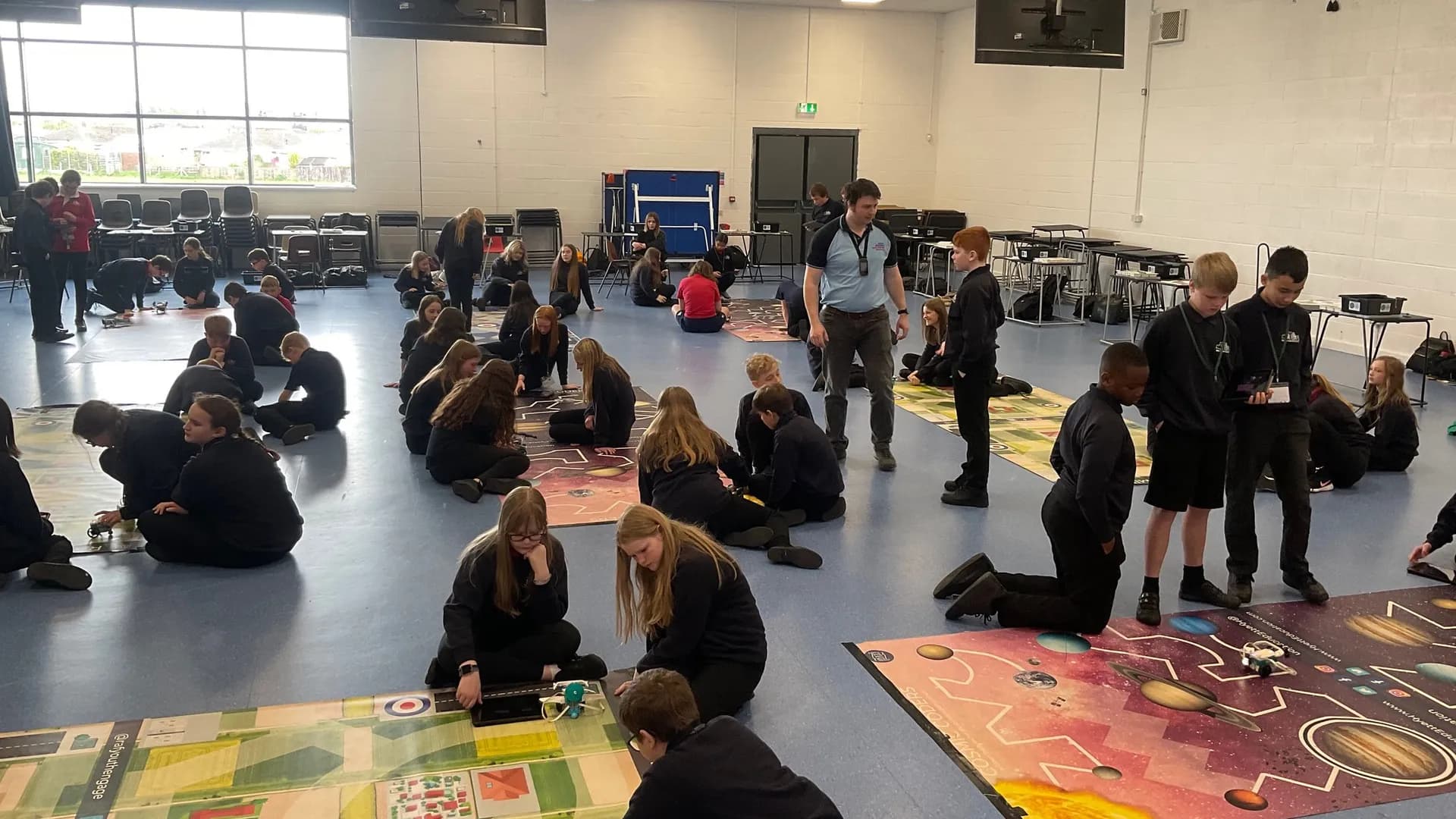



Transition Days That Set Year 7 Up to Thrive
The move from primary to secondary is a significant change. Some pupils arrive at a transition day feeling anxious or unsure about fitting in. A practical group activity gives them a structured way to meet peers, learn the environment and begin working together, alongside the school's wider transition support.
Our STEM workshops place pupils in mixed teams with a shared practical goal: build the robot, debug the code or fly the drone through the course. The format is intended to make conversation and collaboration easier. Individual experiences vary, so the workshop supports rather than guarantees confidence or friendship-building.
Pupils arrive from feeder primaries with different levels of prior experience. Sessions use scaffolded roles and challenges so beginners and experienced pupils can contribute. This is intended to support an inclusive start; we do not claim that one activity predicts later attendance or engagement.
STEM Workshops for School Open Days
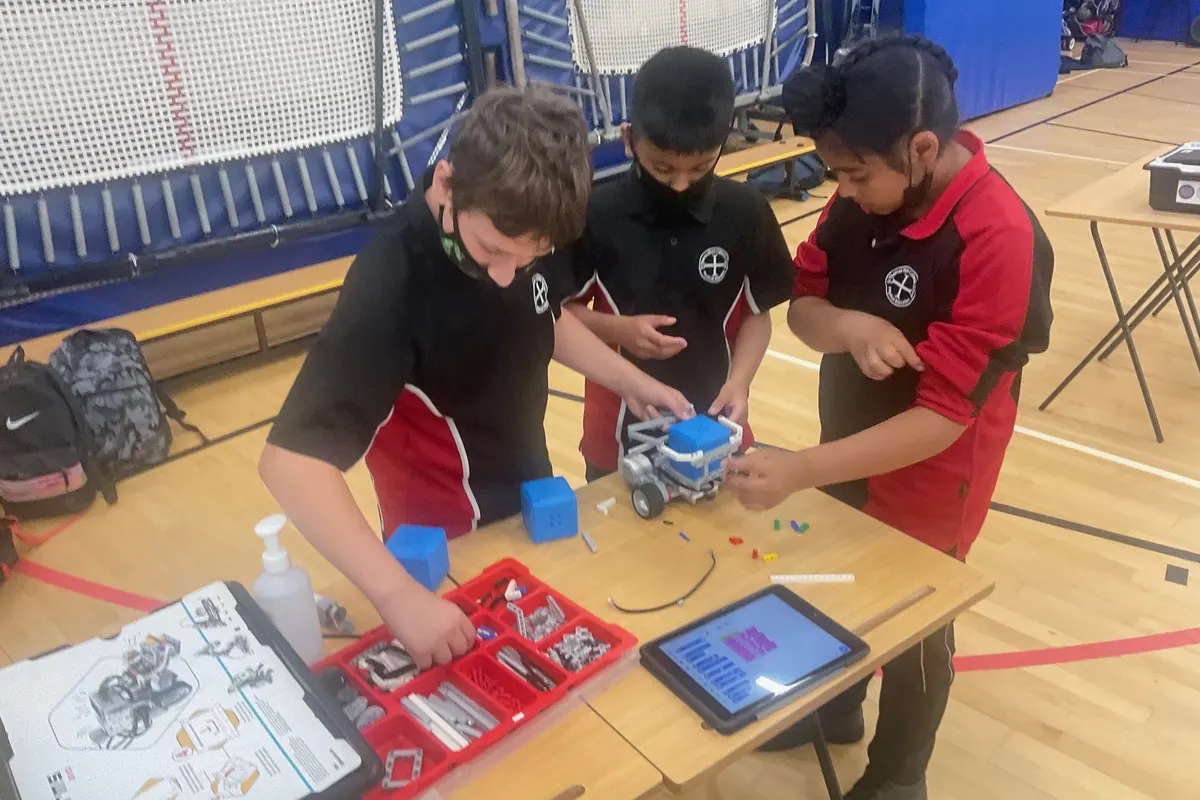
Open days and open evenings give prospective families an opportunity to learn about the school. A live STEM workshop can provide one visible example of practical technology learning; the school decides how that activity fits its event aims and audience.
Depending on the booked format, families may see pupils programming autonomous drones or building and coding robots. A live activity can complement a prospectus, tour and conversations with staff, but family responses and impressions will vary.
Existing pupils can take part as demonstrators during an open day, explaining the task they are completing where the school and instructor agree that role. This creates an opportunity for pupil participation without promising a particular response from visiting families.
Induction Day Activities That Build Connections
Induction days may bring together pupils who have not met. A STEM challenge can give them a practical reason to communicate alongside the school’s wider induction activities.
In the relevant workshop format, teams share a robotics kit and complete progressively harder challenges. The task and suggested roles are intended to encourage discussion, task-sharing, testing and adaptation; participation and interaction will vary between pupils.
The workshop gives pupils a shared experience before September. Schools can use pupil feedback and their own observations to evaluate whether it helped pupils feel more familiar with peers or the setting; the activity does not by itself establish friendships or predict how pupils will settle.
What a Transition Day Can Support
Schools often plan transition days around the aims below. Select the aims that matter for your cohort, then evaluate the activity through staff observations, pupil feedback and the school’s usual transition processes.
- A supportive transition experience: The activity gives pupils a structured opportunity to talk and work together in the new setting. Individual responses vary, so schools should use pupil feedback rather than assume that anxiety has reduced.
- Genuine social connections before day one: The activity gives pupils a structured chance to recognise and work with peers before September. Schools can gather pupil feedback on whether that helped them feel more familiar with the cohort.
- A shared starting task across feeder primaries: Children arrive with different prior experiences. The workshop starts with an accessible shared task and adds progressive challenge, with school staff able to advise on support for individual pupils.
- A clear sense of your school’s identity: The activities selected for transition and open days can contribute to how families understand the school. They should be considered alongside the rest of the event rather than treated as a guaranteed impression.
- Support for confidence and belonging: Collaborative activities are intended to help pupils meet peers, contribute to a team and become more familiar with the setting. Outcomes vary, and the workshop is not presented as a measurable attainment intervention.
- Clear communication with families: Schools can explain the aims of the transition activity and any relevant follow-up to families. A single workshop does not guarantee parent confidence or a particular relationship outcome.
- Records for the school’s own evaluation: Schools may retain curriculum links, participation records and pupil feedback. A workshop does not guarantee or determine an inspection evaluation.
- Opportunities for pastoral observation: School staff may observe how pupils participate and collaborate, then follow their normal transition and pastoral processes. The activity is not an assessment or diagnosis of individual needs.
Our workshops are designed with these aims in mind. The school decides which aims are relevant and evaluates the activity alongside its wider transition programme.
How Our Workshops Fit Your Event
Transition days, open days and induction events often have tight schedules and multiple pupil groups. The session plan and changeovers are agreed for the booked format.
- Flexible session lengths: Standard sessions run for one hour, but we can adapt to 45-minute or 90-minute slots to fit your timetable. Changeover between groups takes just 10 minutes.
- Capacity planned around your event: Capacity depends on the selected workshop, key stage, session length, room setup and staffing. Your quote and agreed timetable confirm the per-session limit, number of sessions and daily total.
- Agreed room setup: We bring the specialist workshop equipment and handle its setup and pack-down. The school provides the agreed indoor space, tables, chairs and power; CAD also requires reliable internet. We confirm the exact setup before the booking.
- Rotation format: Many schools book two or three different workshops and rotate groups through them. This keeps the day varied and means students experience multiple STEM disciplines in a single event.
- Agreed venue options: A hall, gymnasium, large classroom or dining area may be suitable, depending on the workshop. We confirm the room, ceiling height, furniture, power and connectivity requirements before booking.
Where availability and the written quote allow, additional assigned instructors and booked-format equipment can support simultaneous workshops in different rooms. Every Hyett Education instructor holds an enhanced DBS certificate and is registered on the DBS Update Service.
Workshop Options for Year 6 & 7 Transition Days
The following workshops include formats for Year 6 pupils moving up or Year 7 pupils settling in. Check the linked product page for the current age range, capacity and requirements before choosing an event format:
Intermediate STEMbotics (KS2-KS3)
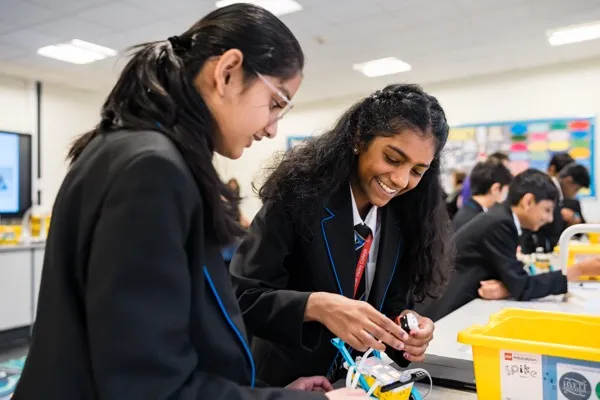
Students work in teams to build and program robots, tackling progressively harder challenges with sensors, conditional logic and multi-step coding. No prior coding experience is required for the introductory task. Capacity is up to 60 pupils per session in Year 6 and Year 7; confirm the selected format in the quote.
View Intermediate STEMbotics details
Drone Coding (Years 5–13)
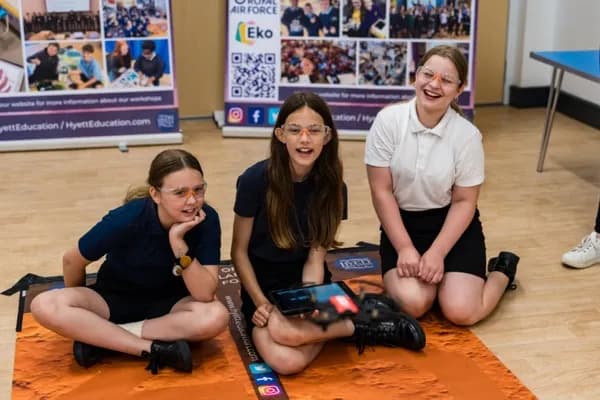
Students program autonomous drones to fly through courses and complete missions, creating a live activity families can observe at an open day. Groups are capped at 30 per session and require an agreed indoor space with suitable ceiling height.
AI & Machine Learning (Years 4–11)
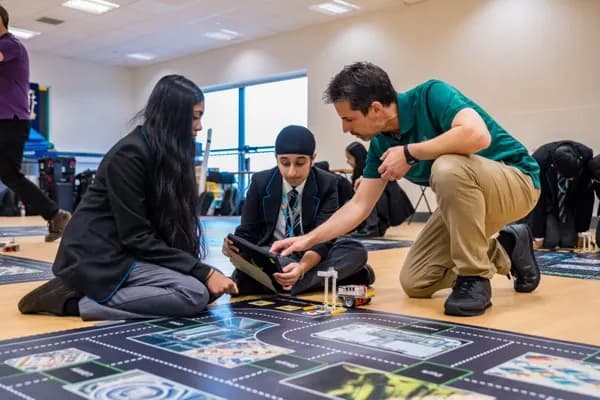
Students train machine-learning models and use them to control robots. The activity can prompt discussion about AI, technology and future applications, so it may suit an open-day programme where those themes are relevant.
View AI & Machine Learning details
Cybersecurity & Cryptography (Years 4–9)

Students work in pairs or small groups to break ciphers, crack codes and unlock the cipher safe through a sequence of escalating challenges. The format gives pupils structured opportunities to discuss and test ideas, but individual interaction varies. The product page sets out the relevant curriculum links for the selected cohort and UK jurisdiction.