


Why Run a STEM Careers Day?
Careers guidance works best when it is concrete. A talk about "jobs of the future" is quickly forgotten; an afternoon spent programming an autonomous drone, training a machine-learning model or cracking an encrypted message is not. A STEM careers day turns an abstract idea, that technology and engineering offer real, well-paid, accessible careers, into something students have actually done with their own hands.
That matters because software engineering, robotics, artificial intelligence, data and cybersecurity all offer routes into STEM employment, while many students rule themselves out before they have tried the work. A practical careers day can help more students picture themselves in those roles, particularly students from backgrounds under-represented in STEM.
For the agreed session, we can give your careers lead a short summary of relevant Benchmark 2 and 4 links. The summary identifies Benchmark 5 only where the agreed format includes a qualifying two-way employer encounter and pupil reflection. Your Careers Leader decides how to record the activity within the wider programme.
How Our Workshops Map to the Gatsby Benchmarks
The Gatsby Benchmarks are the eight standards of good career guidance that all secondary schools in England are expected to work towards, using the updated benchmarks from the 2025/26 academic year. A single workshop is not a whole careers programme. The agreed session can support relevant links to Benchmarks 2 and 4. Benchmark 5 applies only where the agreed format includes a qualifying two-way employer encounter and pupil reflection:
- Benchmark 4, Linking curriculum learning to careers: The agreed session can connect relevant learning in computing, design and technology, science or maths to professional skills used in robotics, software, AI and engineering roles. Pupils do not just hear that coding matters; they use it within the booked workshop activity.
- Benchmark 2, Learning from career and labour market information: Where included in the agreed session, pupils are introduced to relevant career pathways and labour-market information connected to the booked activity, framed for their age group.
- Benchmark 5, Encounters with employers and employees: This benchmark applies only where an employer or employee participates in a two-way encounter with pupils and the activity includes reflection. We will only identify Benchmark 5 where that participation is part of the agreed format; partner branding or a themed workshop alone does not qualify.
After delivery, the summary records relevant Benchmark 2 and 4 links. It records Benchmark 5 only where the agreed format included a qualifying two-way employer encounter and pupil reflection. Your Careers Leader decides how the activity fits the school’s wider programme.
Careers Provision Is a Statutory Duty, We Help You Meet It
State-funded secondary schools in England must provide independent careers guidance throughout pupils' secondary education. Separate provider-access duties specify encounters for pupils in Years 8 to 13. Department for Education statutory guidance asks schools to use the eight Gatsby Benchmarks when developing their careers programme.
A curriculum-linked STEM careers day can contribute evidence for Benchmark 4 within that programme. It is not a replacement for your Careers Leader or wider programme, and each school remains responsible for deciding how the activity fits its statutory provision.
What a STEM Careers Day Looks Like
Careers days run to tight timetables with large numbers of students, and our workshops are built around that reality. You can shape the day to fit your school:
- Single session or full day: Book one inspiring session for a class or careers group, or a full off-timetable day with groups rotating through several workshops. Many schools run a careers day around a theme such as "futures in technology".
- Large group capacity: Our robotics workshops accommodate up to 60 students per session. For a full year group we run back-to-back sessions or parallel workshops on rotation, with additional assigned instructors for larger events. Every Hyett Education instructor holds an enhanced DBS certificate and is registered on the DBS Update Service.
- Matched to your key stages: Workshops span Key Stage 1 through to Key Stage 5, so the careers message is pitched correctly, from early aspiration-building in primary to genuine pathway conversations with Key Stage 4 and 5 students choosing options and post-16 routes.
- Setup agreed in advance: We bring the specialist workshop equipment and handle its setup and pack-down. The school provides the agreed indoor space, tables, chairs and power; CAD also requires reliable internet. We confirm the exact setup before the booking.
- Careers-record summary: You receive a short summary of relevant Benchmark 2 and 4 links. Benchmark 5 is included only where the agreed format included a qualifying two-way employer encounter and pupil reflection. Your Careers Leader can then assess the activity within the wider programme.
For careers fairs and larger events we can run a live demonstration stand alongside hands-on sessions, giving visiting students and parents something genuinely memorable to gather around.
Workshops That Open STEM Career Pathways
These four workshops are the ones schools book most often for careers days and careers-themed events, because each maps to a clear, in-demand career pathway that students can picture themselves in:
Robotics & Coding (KS1-KS5)

Students build and program robots to complete progressively harder challenges, connecting computing and engineering curriculum to careers in robotics, automation and software engineering. Available from beginner sessions for primary through to Python-based robotics for Key Stage 4 and 5, so the careers conversation grows with the age group.
View Intermediate STEMbotics details
AI & Machine Learning (Years 4–11)
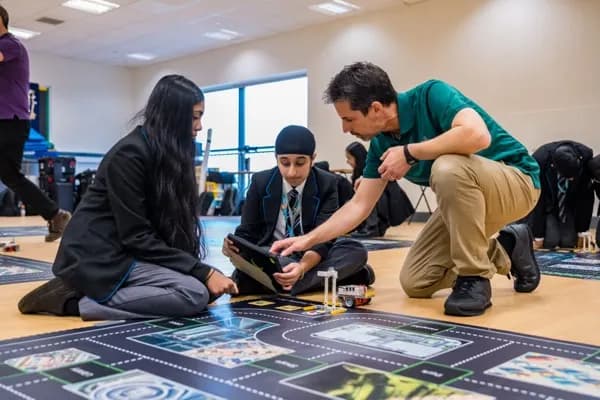
Students train machine-learning models and use them to control robots, opening a direct line of sight to careers in artificial intelligence and data science, one of the highest-demand sectors in the UK. It is the workshop that most reliably gets students, and parents at open events, talking about the future of work.
View AI & Machine Learning details
Cybersecurity & Cryptography (Years 4–9)

Students work in pairs and small groups to break ciphers, crack codes and unlock the cipher safe, mapped to the Computing curriculum and to careers in cybersecurity, a sector facing a well-documented national skills shortage. A strongly collaborative session that suits careers days where teamwork is part of the message.
View Cybersecurity & Cryptography details
Drone Coding (Years 5–13)
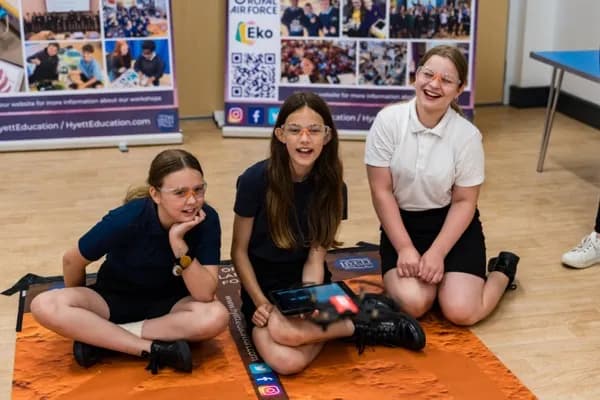
Students program autonomous drones to fly courses and complete missions, linking coding to fast-growing careers in drone technology, aerospace and engineering. The crowd-puller of any careers day or fair, and a vivid way to show that engineering careers are hands-on and creative.