



Why STEM Workshops Work in Special Schools
Students in special schools deserve access to the same exciting, hands-on STEM experiences as their mainstream peers. Too often, enrichment providers treat special schools as an afterthought, offering generic workshops with minimal adaptation. We take a different approach.
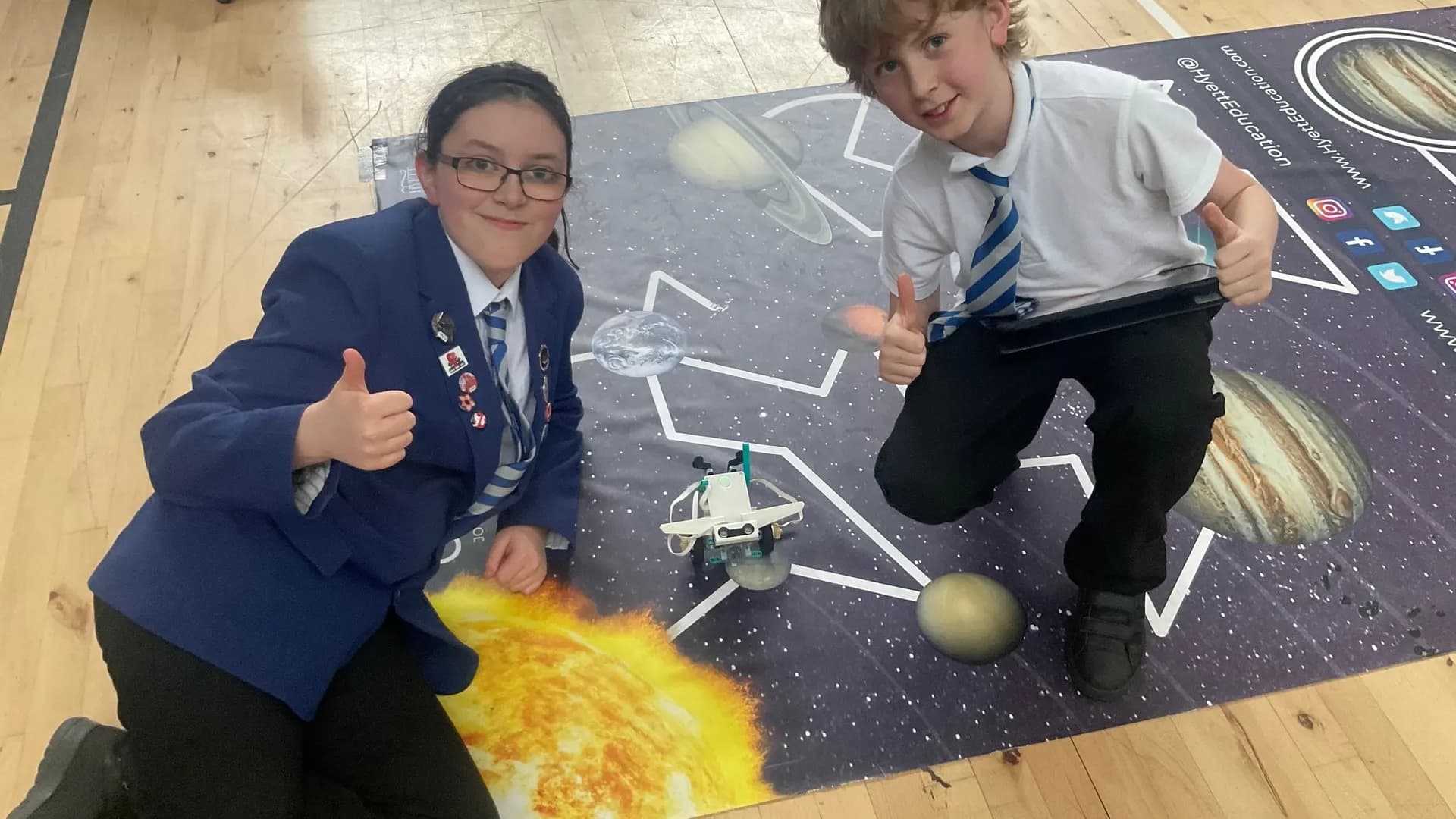
Our workshops are built around practical, tactile activities where students build robots, fly drones, design 3D models, explore electronics, and create stop-motion films. These activities are inherently multi-sensory. Students can see, touch, hear, and interact with what they are learning. For many learners in special school settings, this kind of concrete, hands-on experience is far more meaningful than abstract instruction.
Crucially, every activity is open-ended and success looks different for every student. There is no single correct answer and no pass or fail. A student who programmes a robot to move forward has achieved just as meaningfully as one who builds a complex sequence. This removes the pressure that can cause anxiety and allows every learner to experience genuine accomplishment.
How We Adapt for Special School Settings
Accessibility is not an afterthought in our workshops. It is the foundation. For special school visits, we work closely with your staff to make detailed adaptations that ensure every student can participate, engage, and succeed.
- Flexible group sizes: There is no minimum group size: workshops are priced per day, so smaller groups have a higher per-child cost. We adapt session size for sensory and ratio needs in SEND settings, so very small SEND cohorts and 1:1 settings are no problem. Where appropriate, we can run multiple shorter sessions rather than fewer longer ones.
- Sensory-friendly equipment: We select and adapt equipment with sensory needs in mind. This includes offering alternatives for students who find certain textures, sounds, or lights overwhelming, and ensuring all resources are safe and appropriate for your cohort.
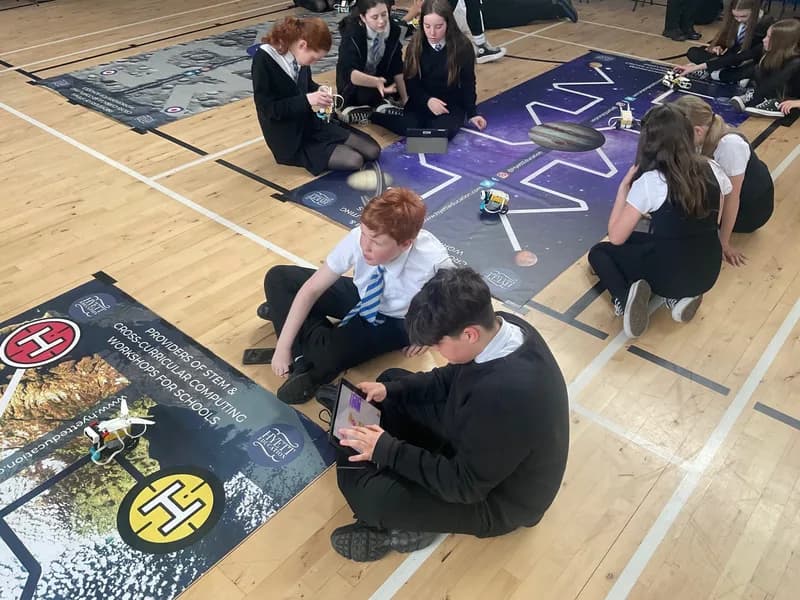
- Visual schedules and supports: Every session includes clear visual schedules, now-and-next boards, and step-by-step visual instructions. We use symbol-supported resources where needed and provide visual learning mats that guide students through each activity.
- Flexible pacing and structure: We adjust session lengths, break timings, and the pace of activities to match your school’s timetable and routines. If students need movement breaks, sensory breaks, or a slower pace, we build that into the plan.
- Compatibility with 1:1 support: Our workshops are designed to work alongside existing support structures. Teaching assistants and 1:1 support staff are welcomed as part of the session, and we brief them on the activities so they can support students effectively.
- Differentiated challenge levels: Every activity offers multiple entry points and challenge levels within the same task. Students working at pre-formal, semi-formal, or formal curriculum levels can all access the same workshop in a way that is meaningful and achievable for them.
Adapting All Ten Workshops for Special Schools
Every Hyett Education workshop can be adapted for special school settings. Each one offers different sensory, tactile, and cognitive entry points; here is how we adapt each for SEND learners.
- Early Engineers (EYFS / KS1): Hands-on LEGO Duplo engineering with large, easy-to-grip pieces. Ideal for sensory-seeking learners and those developing fine motor skills; the building process is calming and the outcomes are tangible.
- Beginner STEMbotics: Block-based coding with LEGO Spike Essential robots. The drag-and-drop interface removes literacy barriers, and the cause-and-effect of programming a robot to move is powerful for learners who respond to immediate visual feedback.
- Intermediate STEMbotics: More advanced block-based coding with LEGO Spike Prime. Still visual rather than text-based, with multiple challenge levels so the same activity works for students at very different points.
- Advanced STEMbotics: Introduces text-based coding for confident KS3/KS4 learners. We support students at any reading level and can pair students so confident readers collaborate with peers who prefer visual approaches.
- Drone Coding: Programming autonomous drones to fly through obstacle courses. Spectacular and motivating, with built-in success: even simple commands produce dramatic results. Requires a high-ceilinged space.
- 3D Design & CAD Printing: Students design models on screen and watch a demonstration print become a physical object they can hold. One demonstration print stays with the school, and every learner keeps their own digital design. Longer formats using 3D Doodle pens may include take-home pen-made creations.
- Cybersecurity & Cryptography: Hands-on code-cracking and puzzle-solving. Strong for learners who enjoy pattern recognition; activities are scaffolded so they work at multiple cognitive levels within the same session.
- AI & Robotics: Training simple machine-learning models to control robots. Visual interfaces make the abstract concept of AI concrete; the robot reacting to student inputs gives immediate feedback.
- Electricity & Circuits: Connecting circuits and components for immediate, visible results. When a light turns on or a buzzer sounds, the feedback is instant and sensory, particularly engaging for learners who respond well to cause-and-effect activities.
- Stop-Motion Animation: Combining creativity with technology. Students build scenes, pose characters, and capture frames to create short films. Naturally accommodates different abilities and allows rich creative expression.
Every group of SEND learners is different. Get in touch and share detail on your students' needs; we will design a bespoke approach so the session lands right for your cohort.
Pre-Visit Planning and Needs Assessment
We never arrive at a special school without thorough preparation. Before every visit, we carry out a detailed needs assessment with your team. This covers the number of students, their ages and abilities, any specific diagnoses or needs we should be aware of, communication methods used, sensory sensitivities, mobility requirements, and any behaviour support strategies that work well for your group.
We use this information to plan every detail of the session, from which equipment we bring and how we set up the room, to the language and communication methods our instructors use. If students use AAC devices, Makaton, PECS, or other communication systems, we will work with your staff to ensure our delivery is compatible. The goal is that every student can access the workshop fully and that your staff feel confident the session will work for their group.
Safeguarding, Safety, and Compliance
We understand that special schools have rigorous safeguarding and safety requirements, and we meet them as standard.
- Every Hyett Education instructor holds an enhanced DBS certificate and is registered on the DBS Update Service. Your instructor's DBS details are shared in your secure booking portal once your booking is made
- Hyett Education holds £10m public liability insurance; confirmation is included in your booking documents in the secure booking portal
- Detailed risk assessments are provided in advance and tailored to your setting
- Equipment is regularly inspected, maintained, and cleaned between visits
- We follow your school’s safeguarding policies and procedures at all times
- Our instructors are trained in working with students with complex needs and understand the importance of dignity, respect, and appropriate interaction
How to Book
Booking a workshop for your special school is straightforward, and we are happy to take whatever time is needed to get the planning right.
- Get in touch: Contact us to tell us about your school, your students, and what you are looking for. There is no obligation at this stage.
- Needs assessment: We will have a detailed conversation about your students’ needs, abilities, communication methods, and any adaptations required. This is where we make sure we get things right.
- Tailored proposal: We will send you a proposal and quote based on your specific requirements. We price fairly for smaller groups and understand that special school budgets can be tight.
- Pre-visit preparation: Preview the setup guides online. Once confirmed, we will send you a detailed preparation guide and agree on room setup, staffing arrangements, and session timings. We can also arrange a pre-visit call or meeting if helpful.
Browse our full workshop range or get in touch to start the conversation.