



This guide explains what STEM workshops are available, how pricing and potential funding routes work, what to expect on the day, and what a school should verify before booking a provider.
It is written for computing leads, STEM coordinators, deputy heads, and headteachers in primary and secondary schools across England, Wales, Scotland, and Northern Ireland. Whether you are booking your first workshop or reviewing your existing enrichment programme, this guide will help you make an informed decision.
Recruitment into technical roles remains difficult. In the Institution of Engineering and Technology's 2025 skills survey, published on 6 October 2025, 76% of engineering employers said they struggle to recruit for key roles.
External STEM workshops can add practical activities and specialist equipment to a school's planned curriculum and enrichment programme. The school should check the chosen activity's curriculum links, age eligibility, capacity, instructor evidence and setup requirements rather than relying on a generic workshop claim.
This guide includes specific pricing information, funding routes, curriculum mapping, and guidance on choosing the right provider. Every section is structured to answer the questions that teachers and school leaders actually ask.
What Are STEM Workshops for Schools?
A STEM workshop for schools is a structured, hands-on learning experience delivered by an external provider within the school setting. Workshops focus on one or more STEM disciplines (science, technology, engineering, and mathematics) and use specialist equipment that schools typically do not have access to, such as programmable robots, drones, 3D printers, or AI training platforms.
STEM Workshops vs STEM Days vs STEM Clubs
These terms are often used interchangeably, but they mean different things:
- STEM workshop: A single focused session (typically 45-90 minutes) on a specific topic, delivered to one class or year group. Multiple workshops are usually run across a full day, covering different groups.
- STEM day: A whole-school event where every year group participates in STEM workshops throughout the day, or a multi-session day for selected groups. Capacity and the number of sessions depend on the workshop, key stage and format.
- STEM club: An ongoing after-school or lunchtime activity, usually run weekly by a member of staff or external provider. Clubs provide depth over time but reach fewer students.
- STEM enrichment: A broad term covering any activity beyond the standard timetable that expands students' experience of STEM subjects. This includes workshops, days, clubs, trips, competitions, and visiting speakers.
How Workshops Map to the National Curriculum
Providers can map workshop activities to relevant curriculum content. The precise links depend on the activity, year group and UK jurisdiction, and do not mean that a single workshop teaches or assesses an entire objective. Common links include:
- Computing (National Curriculum England): Algorithms, programming, logical reasoning, data representation, networks, and cybersecurity. Workshops covering robotics, coding, AI, and cybersecurity can support selected content in these areas.
- Design & Technology: Design processes, technical knowledge, mechanisms, electrical systems, and 3D modelling. Engineering, circuits, and CAD workshops support DT objectives.
- Science: Electricity, forces, materials, and the scientific method. Circuits workshops and engineering challenges provide practical science application.
- Mathematics: Measurement, geometry, coordinates, angles, and data handling. Drone coding, robotics, and 3D design require students to apply mathematical concepts.
- Curriculum for Wales: Workshops can be mapped to the Science and Technology Area of Learning and Experience (AoLE), supporting the “what matters” statements around computational thinking, design, and engineering.
Why Schools Book STEM Workshops
Schools book external STEM workshops for several practical reasons:
- Curriculum enrichment: To give pupils practical experience linked to selected computing, science or DT content using specialist equipment.
- School evaluation records: To retain curriculum links, participation and pupil work as part of the school's own evidence.
- Student engagement: To motivate students through hands-on, practical learning with real-world technology.
- Staff learning: Teachers can observe specialist instructors and discuss approaches; this is not a formal CPD outcome unless it is planned and evaluated as such.
- Careers awareness (CEIAG): To expose students to STEM career pathways as one activity within the school's wider careers programme.
- Targeted participation: Where the school's evidence and strategy support it, to widen access to enrichment and then evaluate participation and outcomes.
Types of STEM Workshop Available
The UK market offers a wide range of STEM workshop types. Below is a detailed overview of each category, including what students do, which age groups each suits, and how they connect to the curriculum.

1. Robotics Workshops
Robotics workshops for schools involve students building and programming physical robots to complete challenges involving algorithms, sequencing, sensors and motor control. The precise concepts depend on the workshop level and year group.
At primary level (KS1-KS2), robotics workshops typically use age-appropriate platforms that allow students to programme using block-based interfaces, combining construction with coding. At secondary level (KS3-KS5), workshops progress to text-based programming languages such as Python, introducing variables, loops, conditionals, and sensor-based decision-making.
Curriculum links: Computing (algorithms, programming, debugging), DT (mechanisms, systems), Mathematics (angles, measurement, coordinates).
Suitable for: EYFS through to KS5, with content differentiated by age and ability. Hyett Education, for example, offers three tiers: Beginner Robotics (KS1-KS2), Intermediate Robotics (KS2-KS3), and Advanced Python Robotics (KS3-KS5).
2. Drone Coding Workshops
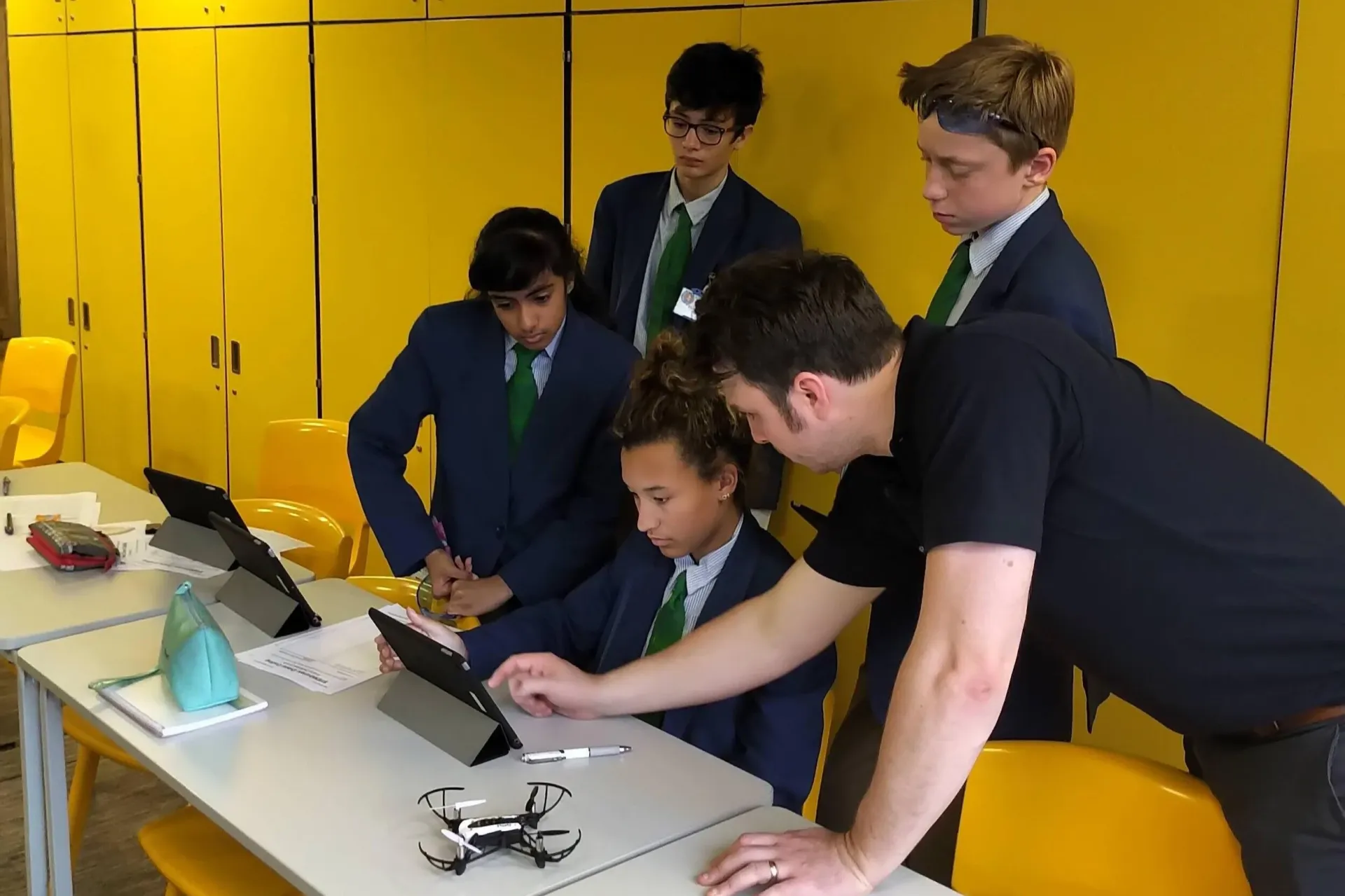
Drone workshops teach students to programme autonomous flight paths using coding languages and visual interfaces. Students learn about coordinates, angles, and three-dimensional movement while programming drones to navigate obstacle courses and complete aerial challenges.
For indoor delivery, ask to see the activity risk assessment and the controls that prevent a drone escaping the enclosed space. If any flight can take place outdoors, or the aircraft could escape outdoors, confirm which current Civil Aviation Authority rules and registration requirements apply.
Curriculum links: Computing (algorithms, programming), Mathematics (coordinates, angles, measurement, 3D space), Science (forces, motion).
Suitable for: Hyett Education's drone workshop is for Years 5-13 (ages 9-18, KS2-KS5). The combination of coding and physical flight offers a practical alternative to a screen-only programming activity.
3. Coding and Programming Workshops
Pure coding workshops focus on software development skills. At primary level, students use block-based programming environments like Scratch to create animations, games, and interactive stories. At secondary level, workshops progress to text-based languages such as Python, covering variables, data types, loops, functions, and file handling.
Some providers offer web development workshops covering HTML, CSS, and JavaScript, while others focus on app development or game design. The key distinction is that coding workshops focus on the software side, without the physical hardware element of robotics or drones.
Curriculum links: Selected computing content relevant to the workshop, year group and UK jurisdiction, plus applicable mathematics such as logic, variables and data handling.
Suitable for: KS1 through to KS5, with content adapted by age. Block-based coding suits primary, while text-based programming is more appropriate for KS3 and above.
Schools can compare the wider range of computing and coding workshops for schools.
4. AI and Machine Learning Workshops
AI workshops for schools are a newer addition to the STEM workshop market, reflecting the growing importance of artificial intelligence in the curriculum and in society. These workshops introduce students to core AI concepts: how machines learn from data, what training data is, how bias affects AI systems, and the ethical questions surrounding automated decision-making.
Students typically train their own machine learning models using age-appropriate platforms, teaching computers to recognise images, sounds, or text. The emphasis is on understanding how AI works, not just using AI tools.
Curriculum links: Computing (data representation, algorithms), PSHE/RSE (online safety, ethics), Science (classification, data analysis).
Suitable for: Hyett Education's AI and Machine Learning workshop covers Years 4-11 (ages 8-16, KS2-KS4), making AI concepts accessible without requiring prior coding experience.
5. Cybersecurity Workshops
Cybersecurity workshops for schools cover online safety, data protection, cryptography, and digital forensics. Students learn to create and crack codes, understand how passwords are compromised, explore network security concepts, and investigate simulated cyber incidents.
Online-safety and computing requirements vary by year group and jurisdiction. Check which selected workshop activities link to the school's planned content rather than treating a cybersecurity theme as complete coverage.
Curriculum links: Computing (networks, security, data), PSHE/RSE (online safety, digital citizenship), Mathematics (cryptography, logic).
Suitable for: Hyett Education's cybersecurity workshop covers Years 4-9 (ages 8-14, KS2-KS3). Content is differentiated from password safety and phishing awareness at primary level to network security and encryption at secondary.
6. Engineering and Circuits Workshops
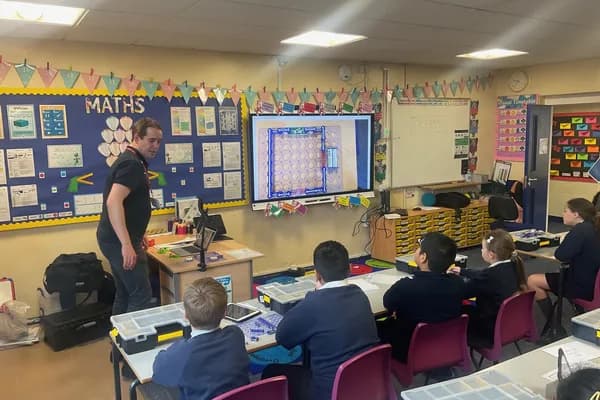
Engineering workshops focus on physical construction, electrical circuits, and mechanical systems. Students build working circuits, explore conductors and insulators, and apply their understanding to practical challenges. Simple series circuits support statutory Year 4 and Year 6 content; parallel circuits and generation are optional extension work.
Early years and KS1 engineering workshops focus on structures, mechanisms, and simple machines, using construction challenges to develop problem-solving and teamwork. The electricity workshop covers Years 2-6: Year 2 conductivity is enrichment, while its simple-series work supports statutory Year 4 and Year 6 science.
Curriculum links: Science (electricity, forces, materials), DT (mechanisms, structures, electrical systems), Mathematics (measurement).
Suitable for: EYFS through to KS2. Hyett Education offers Early Engineers (EYFS-KS1) for ages 3-7 and the Electricity & Circuits workshop for Years 2-6 (KS1-KS2). Pupil activities do not require school IT equipment; suitability still depends on the agreed room, furniture, power, cohort needs and booked format.
7. 3D Design and CAD Workshops
3D design and CAD workshops for schools introduce students to computer-aided design (CAD) software, teaching them to create three-dimensional models on screen. Some providers extend this to 3D printing, allowing students to produce physical objects from their digital designs.
Students learn about design thinking, iterative prototyping, spatial reasoning, and the design-to-manufacture pipeline used in real engineering and product design. These workshops connect strongly to the Design and Technology curriculum.
Curriculum links: DT (design, CAD/CAM, iterative design), Computing (digital literacy, software skills), Mathematics (geometry, measurement, spatial reasoning), Art (form, proportion).
Suitable for: Hyett Education's CAD workshop covers Years 3-7 (ages 7-12, KS2 to early KS3). The combination of creativity and technical skill makes 3D design workshops popular for cross-curricular enrichment days.
8. Animation and Creative Computing Workshops
Stop-motion animation workshops for schools sit at the intersection of computing, art, and literacy. Students create short animated films using tablets, cameras, and animation software, learning about frame rates, sequencing, narrative structure, and digital media production.
The combination of storytelling, visual design and digital production gives schools a cross-curricular route into selected computing, English and art content.
Curriculum links: Computing (digital literacy, multimedia), English (narrative, storytelling), Art (visual composition, design), DT (iterative design).
Suitable for: KS1 through to KS2. Stop-motion animation is especially suited to a cross-curricular activity linking selected computing, English and art content.
9. Science Workshops
Science workshops can provide practical investigations and demonstrations using additional equipment or facilitation. Topics may fall into three broad areas:
- Physics: Forces, motion, light, sound, magnetism, electricity, and energy. Workshops often involve building and testing structures, investigating friction and air resistance, or exploring circuits and electromagnetism.
- Chemistry: Materials, chemical reactions, states of matter, acids and alkalis, and separation techniques. Hands-on chemistry workshops allow students to conduct experiments safely with specialist equipment and supervision.
- Biology: Classification, habitats, the human body, plants, and ecology. Some providers offer outdoor investigation workshops, while others focus on microscopy, dissection, or anatomy models.
Science workshops range from theatrical science shows, which use spectacular demonstrations to inspire curiosity, to structured investigation workshops where students design and conduct their own experiments. Both have value, but investigation-based workshops tend to align more closely with the National Curriculum's emphasis on working scientifically.
Many technology and engineering workshops naturally incorporate science content. Electricity and circuits workshops cover Years 2-6 (KS1-KS2). Simple series circuits directly support the statutory Year 4 and Year 6 science curriculum; Year 2 conductivity is an enrichment application, while parallel circuits and generation are optional extensions. Engineering challenges involve forces, materials, and structures. Drone coding touches on aerodynamics and motion. Schools looking for a STEM day that includes science alongside computing and engineering can often achieve broad curriculum coverage through careful workshop selection. Schools comparing Hyett Education's current practical offer can browse its science and engineering workshops for schools.
Curriculum links: Selected science and working-scientifically content relevant to the workshop, year group and UK jurisdiction, plus applicable mathematics such as measurement, data handling and graphs.
Suitable for: EYFS through to KS4. Science workshops are particularly popular at primary level, where they support statutory science curriculum content that requires practical investigation.

How to Choose a STEM Workshop Provider
Not all STEM workshop providers are equal. The market ranges from individual freelancers to national organisations, and quality varies significantly. Here are the key criteria to evaluate when selecting a provider.
1. Qualifications and Safety
Ask each provider about its safeguarding arrangements, and check that it shares DBS confirmation for the people who will deliver the session with the booking. Also look for:
- Public liability insurance: Check the cover limit and that the provider shares insurance confirmation with the booking. Hyett Education holds £10m public liability insurance; confirmation is included in your booking documents in the secure booking portal.
- Risk assessments: The provider should supply written risk assessments for every workshop, specific to the equipment used. Generic risk assessments are a red flag.
- Safeguarding training: Instructors should hold current safeguarding qualifications and understand the school's safeguarding procedures.
- Curriculum expertise: Ask who designed the curriculum mapping, what relevant qualifications and experience they hold, and inspect the mapping for the selected workshop and cohort.
- Drone controls: For indoor drone workshops, inspect the activity risk assessment and escape controls. If outdoor flight or escape is possible, confirm the applicable CAA rules and registration.
2. Curriculum Alignment
Ask the provider to show you exactly how each workshop maps to specific curriculum objectives. A good provider will reference specific National Curriculum statements, not just vague claims about “supporting STEM learning.”
Look for:
- Curriculum mapping documents for each workshop
- Differentiation plans for different year groups and abilities
- Pre-workshop and post-workshop resources for teachers
- Assessment opportunities built into the workshop activities
3. Equipment and Resources
Confirm which specialist equipment the provider supplies and which venue facilities the school must provide. For Hyett Education, the quoted format includes its specialist kit, while the school provides the agreed indoor space, tables, chairs and power; CAD formats also require reliable internet. Check:
- Which specialist equipment and consumables are included
- Backup equipment is available in case of technical failure
- Whether school devices or reliable internet are required
- Setup and pack-down are handled by the provider's team
4. Pricing and Transparency
Obtain a current written price and compare the same scope across providers. A headline rate is useful only when the workshop, format, location, VAT position, capacity and inclusions are clear.
Key questions to ask:
- Is the price per day or per session?
- Are there travel surcharges?
- Is equipment included in the price?
- Are there minimum or maximum group sizes?
- Do you offer multi-booking discounts?
Hyett Education publishes its current day rates through an instant pricing tool, using one of five geographic price bands selected from the school postcode.
5. Age Range Coverage
For a multi-year-group day, check that every proposed group falls within the selected workshop's stated eligibility and capacity. A provider's overall catalogue age range does not mean that every product serves every year group.
Check that the provider offers genuinely differentiated content for each age group, not just the same activity simplified or made harder.
6. Track Record and Reviews
Ask for:
- References from schools similar to yours
- Case studies or testimonials
- Google reviews or Trustpilot ratings
- Evidence of repeat bookings (a strong signal that schools are satisfied)
7. Flexibility and Inclusion
Inclusion planning should be specific to the pupils and selected activity. Ask how the provider will:
- Differentiate activities for students with SEND
- Adapt content for different ability levels within the same session
- Apply the product's group-size limits
- Handle an agreed timetable change
- Support EAL (English as an Additional Language) students with visual and hands-on learning approaches
How Much Do STEM Workshops Cost?
Prices and inclusions vary by provider and product. Use a current written quote, not a generic market average, and compare the workshop, format, capacity, location, VAT and school-side requirements on the same basis.
Getting an Accurate Price
Provider prices and inclusions vary. Obtain a current written quote that confirms:
- The assigned instructor and the evidence the school can verify
- The specialist equipment and consumables included
- The number and length of sessions
- Pre-workshop liaison and planning
- Curriculum-aligned content and resources
Hyett Education prices start from £597 per day, excluding VAT. The exact price depends on the workshop and one of five geographic price bands selected from the school postcode and is available through the Instant Quote.
Per-Day vs Per-Pupil Pricing
Hyett Education uses a per-day pricing model for pupil workshops. The day price does not change with the number of pupils, but eligibility and capacity do. Divide the exact quote by actual participation only when a per-pupil comparison is useful to the school.
Some providers charge per pupil. Compare the total current quote, inclusions and participating-pupil capacity rather than relying on a generic per-pupil estimate.
What Affects the Price
When comparing providers, check which factors their current quote uses:
- Location: Ask how the school's postcode affects the quote and whether any booking-specific travel term is stated separately.
- Workshop type: Compare the quoted product and included specialist equipment rather than assuming every theme has the same rate.
- Number of instructors: Confirm the staffing included and the reason for any additional-instructor charge.
- Duration: Confirm whether the quote is for a session, half day or full day. Hyett Education's pupil workshop product is a full-day booking; its separate staff CPD and Tech Tigers products may use other formats.
Hyett Education's Pricing
Hyett Education publishes pricing openly across its full workshop range, starting from £597 per day, excluding VAT. This includes:
- An assigned specialist instructor, who holds an enhanced DBS certificate and is registered on the DBS Update Service
- The specialist equipment and consumables for the quoted format
- The workshop-specific delivery format shown in the quote
- Selected four-session robotics taster days can reach up to 128 pupils in KS1 or 240 pupils in KS2. Other workshops and formats have lower capacities, which are shown on each workshop page.
- Any planning or follow-up resources stated for the quoted workshop
- The stated geographic price band and VAT position
An instant pricing tool is available on the Hyett Education website, allowing schools to see the current workshop- and postcode-specific figure immediately. Dates, delivery format and any booking-specific requirements are confirmed during booking.
Cost Comparison: Workshops vs School Trips
An in-school workshop removes the two costs that make an off-site trip expensive: coach hire, and cover for the staff who leave the building. The benchmarks below are published figures with their source and date given inline, so you can check them and replace them with your own quotes.
One figure we will not give you is a market price range for workshop providers. No UK survey of provider day rates exists, published rates vary widely with group size, region and the number of instructors, and most providers do not publish at all. Any single band would be invented. Compare the actual quotes in front of you instead.
Compare the current workshop quote with the actual trip costs available to your school:
| STEM Workshop (in-school) | STEM Trip (off-site) | |
|---|---|---|
| Typical cost | From £597/day excluding VAT | Around £30 per pupil charged to parents for a day trip (Zurich UK and Parentkind, OnePoll survey of 1,000 UK parents, May 2025). Use the venue's current quote for your own figure. |
| Students reached | Varies by workshop, key stage and format | Use the venue and transport capacity |
| Transport costs | No pupil transport; use the exact workshop quote | £700 to £1,200 for a 49-seat coach for the day (Bouden Coach Travel published guide prices, April 2026; an operator guide range, not a quote). Often already inside the per-pupil charge above. |
| Supply cover | School confirms the staff who remain present. No agency cover cost where class teachers stay on site. | £218 per day primary and £291 secondary as the cost to school, including employment costs and agency margin (DfE, Supply teachers framework benefits report, June 2026, before the April 2026 agency margin cap took effect). Rarely charged to parents. Use your own agency rates. |
| Cost per student | Divide the exact quote by the confirmed participating pupils. Worked example: £597 ÷ 240 = £2.49, using a selected four-session robotics taster day reaching up to 240 KS2 pupils. Other workshops, key stages and formats reach fewer pupils, so the per-pupil figure is higher. | Calculate from the complete current trip cost, including any coach hire and staff cover the school funds itself. |
| Risk assessment | Provider supplies the activity assessment; school retains on-site duties | School follows its off-site visit policy using current venue information |
| Curriculum time lost | Timetabled on site; school plans the curriculum sequence | Includes the journey and time at the destination |
Calculate value using the exact workshop format and number of participating pupils. Hyett Education publishes the relevant capacities by workshop and key stage, and the instant quote gives the day rate for your school postcode.
Read our full comparison of in-school workshops vs school trips
Funding STEM Workshops
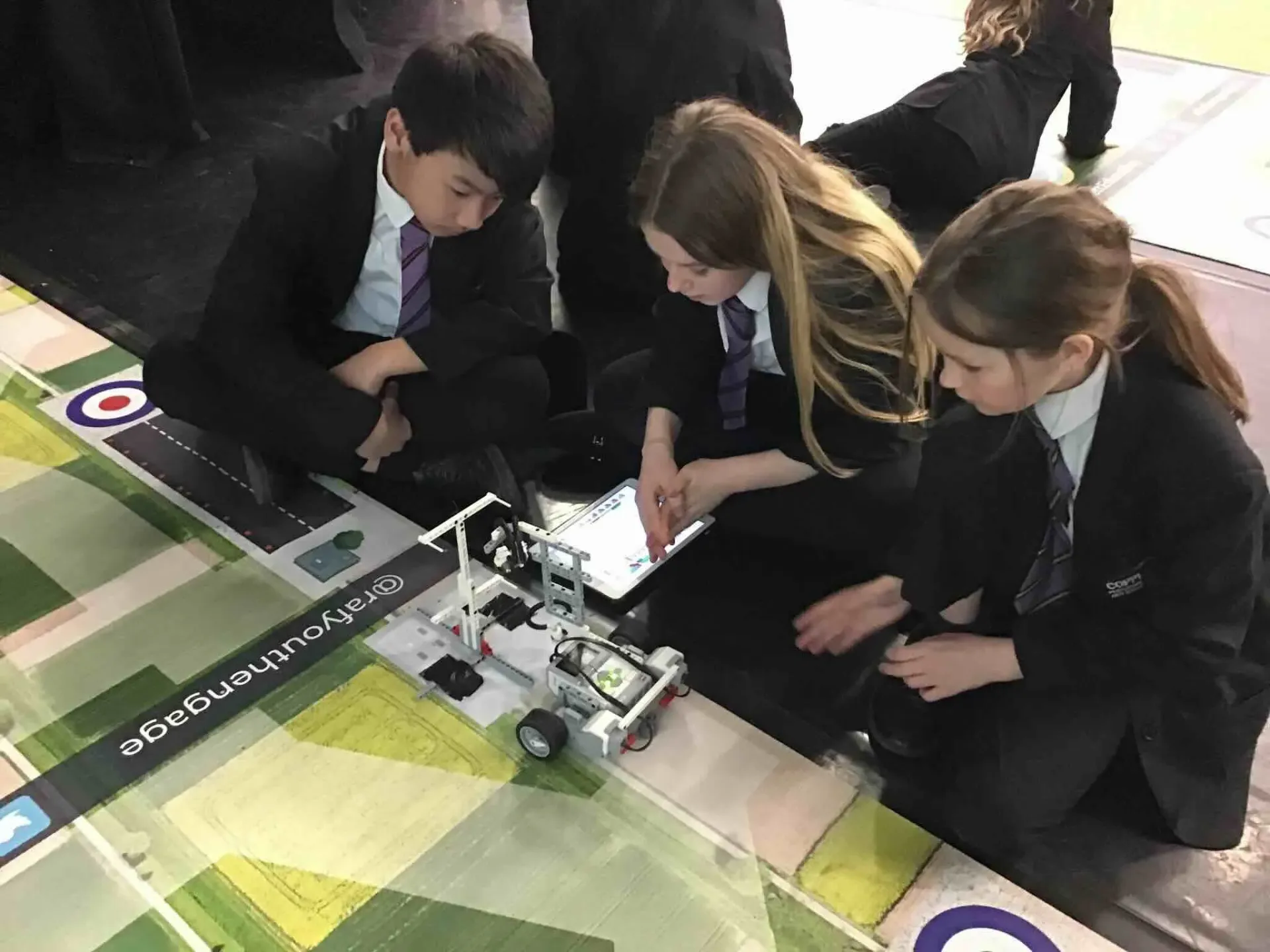
Schools can consider programme funding, their own evidence-led budgets, PTA support or local sponsorship. Terms change, so confirm each external route before relying on it.
Externally funded places
Hyett Education works with approved public-sector and industry partners. Funded places may sometimes be available, but availability changes and a place is not guaranteed. Register your school's interest and we will explain any suitable option that is open at the time.
Pupil Premium
Schools can and do fund STEM workshop days from their pupil premium. The Department for Education's current menu of approaches places "enrichment such as extracurricular and co-curricular activities" within the wider strategies tier, so the spend is permitted where your school links it to a barrier its disadvantaged pupils face and records it in your pupil premium strategy statement. The conditions of grant also confirm that pupil premium "can also be used for whole class interventions which will also benefit non-disadvantaged pupils", so a whole-class workshop day is not ruled out.
Source: Department for Education, "Using pupil premium: guidance for school leaders" and the pupil premium conditions of grant for the 2026 to 2027 financial year, as at 7 August 2026. Booking a workshop does not by itself demonstrate impact or a narrowed attainment gap. Schools should document:
- How the workshop addresses identified gaps in disadvantaged pupils' learning
- The selected curriculum links and intended outcomes
- Which pupils participated and how outcomes will be evaluated
- How the activity contributes to the school's Pupil Premium strategy
Every activity funded from pupil premium must fall under one of the approaches in the DfE menu, and schools with an allocation for more than five eligible pupils publish a strategy statement by 31 December each year. Check the current guidance and your school's published strategy before committing the spend.
PTA and Fundraising
A PTA may choose to contribute to an enrichment booking. A proposal can set out:
- Several classes or year groups can participate in one booking
- The school can calculate a per-pupil cost from its exact quote and capacity
- The activities, intended participants and curriculum or enrichment rationale
- How the school will communicate and evaluate the use of funds
Hyett Education workshops start from £597 per day, excluding VAT. Use the Instant Quote to show the PTA the exact workshop, format and capacity its contribution would fund.
Corporate Sponsorship and CSR Programmes
A business may fund school STEM activity where its current community or CSR programme permits it. Check the programme's terms and approach the organisation with a clear proposal covering the participating pupils, workshop scope, safeguarding, intended outcomes and reporting.
School Budget Allocation
If external funding is not available, schools can allocate funds from several budget lines:
- Computing budget: A school may use it where the selected activities support identified computing priorities and the budget rules allow the spend.
- Enrichment budget: STEM workshops are enrichment by definition.
- CPD budget: Use this for a structured staff-development product, not simply because teachers observe a pupil workshop.
- Careers (CEIAG) budget: Workshops expose students to STEM career pathways.
Making the Case to SLT
When presenting the case for STEM workshops to your senior leadership team, focus on:
- Value for money: show the exact Instant Quote, workshop capacity and a current comparison with any trip or in-house alternative.
- Curriculum rationale: identify the specific links the selected workshop supports and what classroom teaching will precede or follow it.
- School records: retain curriculum links, participation and pupil work without assuming an inspection outcome.
- Fewer off-site logistics: Workshops happen in school, so there is no pupil transport to organise. The school still prepares the agreed space and retains its normal supervision and site duties.
- Planned access: Share the cohort’s needs in advance so the provider can discuss suitable adaptations, group sizes and formats. In-school delivery avoids asking families to fund transport for an off-site trip.
- Staff learning: Observation may give staff useful ideas, but schools seeking defined development outcomes should book and evaluate a dedicated CPD product.
What to Expect on Workshop Day
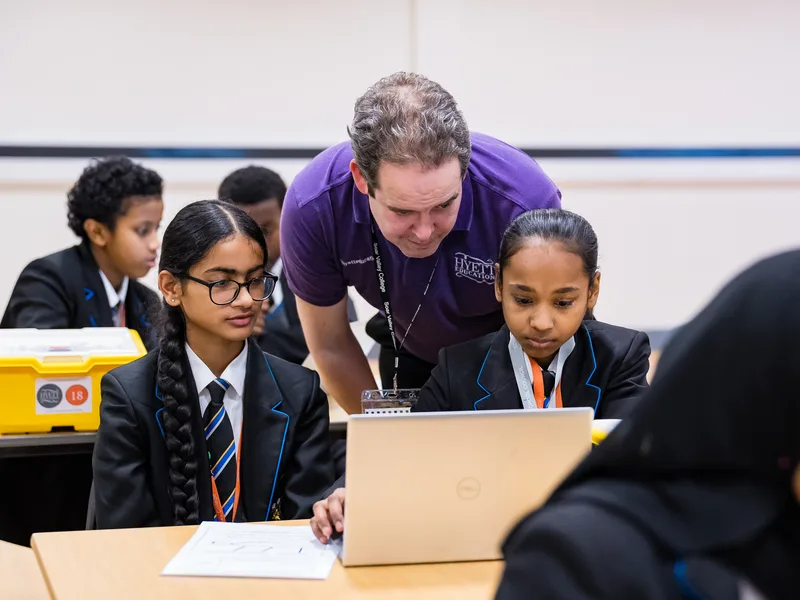
Knowing what to expect helps schools prepare effectively and get the most from the experience. Here is a typical workshop day from arrival to departure.
Before the Day
The workshop provider will contact the school in advance to confirm:
- Which workshops are being delivered and to which year groups
- The number of students per session
- The room or space available (usually a school hall, classroom, or library)
- The timetable for the day, including break and lunch times
- Any specific requirements (power sockets, table arrangements, SEND information)
Setup and Arrival
Confirm the arrival and setup window in the booking. Hyett Education asks for access to the agreed indoor space at least 60 minutes before the first session. The school provides suitable tables, chairs and power; the quoted format includes its specialist equipment, and CAD also requires reliable internet.
Confirm the Timetable
There is no universal workshop timetable. The product page and quote state the available formats for the selected workshop. For example, Beginner and Intermediate STEMbotics can be quoted as one 4 to 4.5-hour session, two 2-hour sessions, three 90-minute sessions or four 60-minute sessions. Other products have different format limits. The school and provider confirm arrival, breaks, lunch and changeovers before delivery.
Group Sizes
Selected four-session robotics taster days can reach up to 128 pupils in KS1 or 240 pupils in KS2. Other workshops and formats have lower capacities, which are shown on each workshop page. For larger year groups, ask for a quote for parallel or multi-day delivery.
Teacher Involvement
A member of school staff must be present in the room at all times, as is standard safeguarding practice for any external visitor. Teachers do not need to deliver any content or have technical knowledge. Many teachers find it valuable to observe, picking up ideas and approaches they can use in future lessons.
Equipment
We bring the specialist equipment. Schools provide a suitable indoor space, tables, chairs and power; the CAD workshop also needs reliable internet access. We confirm the exact setup before the visit.
After the Workshop
Good providers will supply follow-up resources, which may include:
- A summary of what was covered and which curriculum objectives were addressed
- Suggested follow-up activities for teachers
- Student certificates or achievement records
- Photographs (with prior consent) for school newsletters or social media

How Workshop Records Can Support Ofsted Evidence
Since November 2025, inspections of state-funded schools in England no longer produce an overall effectiveness grade. Evaluation areas include curriculum and teaching, inclusion, achievement, attendance and behaviour, personal development and wellbeing, and leadership and governance; safeguarding is reported as met or not met. Workshop records may form part of a school’s own evidence, but a workshop does not guarantee or determine an inspection evaluation.
Curriculum and Teaching
Where a workshop is deliberately connected to the school's curriculum, its mapping, objectives and pupil work form part of the evidence for the curriculum and teaching evaluation area, through specialist subject content the school could not otherwise deliver. Keep the records you would keep anyway. Inspectors no longer carry out curriculum deep dives, they do not require schools to create extra documents for inspection, and they do not expect individual or previous lesson plans or photographic evidence.
Personal Development and Wellbeing
Workshops contribute to personal development through:
- Careers awareness: Students learn about STEM careers and the skills required. This supports the Gatsby Benchmarks, the framework which more than 90% of England's schools and colleges use to structure their careers programmes (Gatsby Foundation, "Good Career Guidance: The Next 10 Years", November 2024), and particularly Benchmark 4, linking curriculum learning to careers. The benchmarks are statutory for Years 7 to 13, so they apply to secondary rather than primary bookings.
- Cultural capital: Exposure to technology, engineering, and design thinking broadens students' experience and aspirations.
- Character development: Workshops build resilience, teamwork, and problem-solving skills.
Where student voice or careers-programme records are already part of the school's normal evaluation, the workshop is reflected there and contributes to the personal development and wellbeing evaluation area. No separate inspection record is needed.
Attendance and Behaviour
Staff may record observed participation, collaboration and behaviour during the day. Those observations describe the activity; they do not by themselves establish a wider attendance or behaviour evaluation.
Staff can use their ordinary evaluation processes where useful; a one-off workshop should not be presented as evidence of a wider attendance or behaviour trend.
Inclusion, Achievement, Leadership and Governance
Records of reasonable adjustments, participation and pupil work speak to the inclusion evaluation area, particularly where the session is adapted so every pupil takes part. Records of spending decisions and follow-up speak to leadership and governance, where the workshop forms part of a planned enrichment strategy rather than a one-off. Leaders decide how those records fit the school's broader evidence; no single workshop determines an evaluation.
No Bespoke Ofsted Pack Is Required
Schools should not create a workshop evidence pack solely for inspection. Keep only the curriculum, safeguarding, procurement or evaluation records the school would normally retain for its own purposes. Inspectors may discuss how leaders evaluate provision, but the current inspection information says schools should not do extra work or create documents specifically for an inspection.
Finding a STEM Workshop Provider
Check the exact provider and delivery team for the proposed booking. Brand size or operating model does not replace current evidence about the product, instructor, insurance, safeguarding, capacity and price.
Evidence to Check
Before confirming a booking, ask for:
- Provider identity: the legal or trading name, contact details and written booking terms.
- Assigned instructor: the relevant qualifications and experience of the person who will attend, and confirmation that their DBS details are shared with the booking.
- Insurance and safeguarding: the cover limit, confirmation that insurance details are shared with the booking, the activity risk assessment and the division of school and provider responsibilities.
- Product facts: eligible year groups, group and daily capacities, session format, curriculum links and any important exclusions.
- Practical requirements: what equipment the provider supplies and what space, furniture, power, connectivity and staff the school supplies.
- Commercial scope: the current written price, VAT, cancellation and rescheduling terms, and anything not included.
About Hyett Education
Hyett Education is a national STEM workshop provider offering 10 products with product- and cohort-specific curriculum links, covering ages 3-18. Founded in 2017 by Antony Hyett, a QTS-qualified Computing Teacher, the company's internally verified experience now covers 1,000+ schools. Hyett Education works with approved public-sector and industry partners. Workshop topics include robotics, drone coding, AI and machine learning, cybersecurity, electricity and circuits, 3D design and CAD, stop-motion animation, and early engineering. Pricing starts from £597 per day, excluding VAT, with the current product- and postcode-specific rate selected from five geographic bands by the instant pricing tool. The booked format includes its specialist equipment and an assigned specialist instructor; the school provides the agreed room, tables, chairs and power, plus reliable internet for CAD. Format, availability, evidence, inclusions and school-side requirements are confirmed for the booking.
Finding Providers in Your Area
If a local authority or multi-academy trust maintains a provider list, check when it was last reviewed and what approval actually covers. The school should still verify the current booking-specific evidence.
How to Compare Providers
When comparing providers, use the criteria outlined in the “How to Choose” section above. The key differentiators to look for are:
- Age range: Does the provider cover your full school, or just one key stage?
- Pricing transparency: Can you see the price before committing to an enquiry?
- Equipment and setup: Which specialist kit is included, and what must the school provide?
- Curriculum alignment: Are workshops mapped to specific curriculum objectives?
- Funded availability: Can the provider explain whether a suitable funded place is open at the time of enquiry, without implying that a place is guaranteed?
- Breadth of offering: Can you book different workshops for different year groups on the same day?
Key Statistics
- 1,000+ schools reached
- 10 workshops available, covering EYFS to KS5
- Ages 3-18: The full school age range covered
- Workshop-specific capacities, separated by key stage wherever the delivery limits differ
- Funded places may sometimes be available; availability changes and a place is not guaranteed
- Pricing from £597/day excluding VAT, with specialist equipment and an assigned instructor included. Every instructor holds an enhanced DBS certificate and is registered on the DBS Update Service. Your instructor's DBS details are shared in your secure booking portal once your booking is made
- Postcode-based instant quotes, allowing schools to calculate the cost against their confirmed participating pupils
- Multiple session formats: the available structure is published for each workshop
- Clear year-group eligibility: partial key stages are shown as exact year ranges rather than broad labels
- Session numbers and capacities vary by workshop, key stage and format
- Founded 2017 by a QTS-qualified Computing Teacher
- Specialist equipment provided: schools provide the agreed room setup, power and reliable internet for the CAD workshop
- Coverage: across the UK and internationally, with bespoke quotes for schools outside mainland UK and for international schools