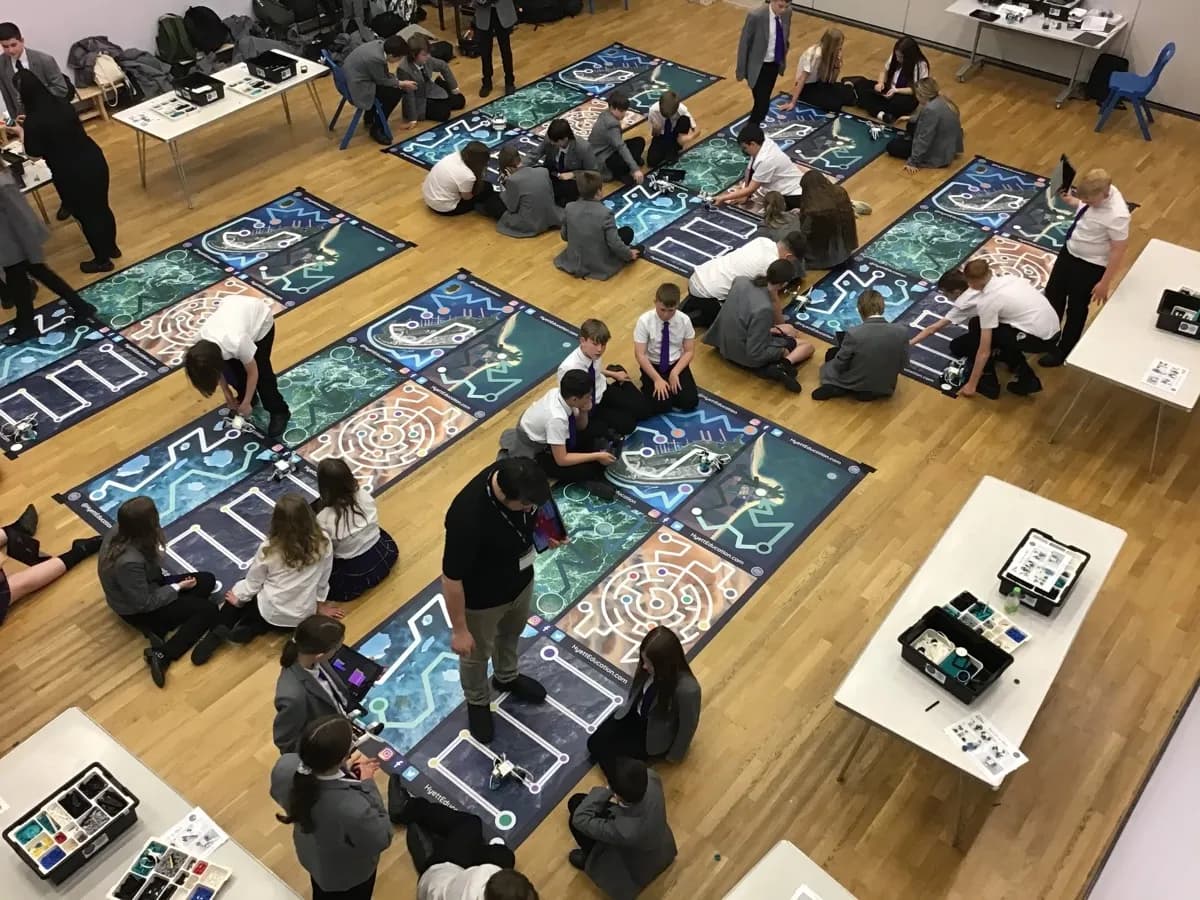
British Science Week 2027 runs from 5 to 14 March. The official theme is Creativity, with resource packs exploring “Creativity: the power of ideas”. For EYFS and KS1, you can make that concrete: children suggest a design, try it, notice a problem and change their idea.
Choose one manageable thread for your class rather than a different spectacle every day. Bridges, journeys and structures offer practical ways to connect talk, construction and observation with resources children already know.
Use the official resources as your starting point
The British Science Week website publishes the confirmed dates and information about official resources. On 4 October 2026, the organiser's resource packs page listed the 2027 taster pack as available. Check the current resources and any competition or grant terms when you make your final plan.
A school's activities do not have to occupy all ten days. Choose the school days that suit your timetable and connect your activities to the wider class curriculum. The ideas below are illustrative classroom suggestions, not claims about a delivered event or a booked Hyett programme.
EYFS: make a route for a toy journey
Invite children to build a route between two familiar places, such as a station and a home. Use materials approved by your setting and a toy suited to the children. Add a gap or obstacle only when the group is ready.
Ask children to show where the toy will go. Test their route, then give them time to change it. Adults can model words such as across, beside, through, bridge and support as the problem develops.
Record children's choices through talk, pointing or photographs of the construction where your media policy allows. Keep the focus on the idea they tried, rather than whether their model resembles an adult's example.
Year 1: compare two ways to build a bridge
Give children a shared gap and a small selection of suitable construction materials. Ask pairs to try two designs and use the same toy to test each.
An adult can help them identify one difference: the supports are wider, the top is longer, or the base has changed. Encourage children to explain which design they would choose and why. A drawing with labels or an oral explanation can capture their reasoning.
These are suggested activities. Your teacher judgement, risk assessment and available resources determine the exact task.

Year 2: improve a design for a user
Add a clear requirement to the bridge or route challenge. For example, an illustrative toy-town task could ask children to make a crossing that leaves space underneath for a boat.
Children can sketch an idea, build it and test whether it meets the requirement. Ask them to identify one improvement rather than simply rebuilding from scratch. Compare the finished design with the original drawing and discuss why it changed.
This keeps creativity connected to solving a problem. There can be several workable answers, each with a reason behind it.
Fit a workshop to the youngest year groups
Hyett's British Science Week workshop planning page is the place to compare the wider school options. For Nursery to Year 2, Early Engineers Express uses LEGO Duplo trains and construction challenges.

The current Early Engineers Standard format has three 90-minute sessions, with up to 30 pupils per session. A school with one Reception, one Year 1 and one Year 2 class could discuss one session for each class, provided each group fits that limit.
That is an illustrative allocation, not a confirmed timetable or statement of March availability. Agree arrival, setup, breaks, changeovers, staff supervision and the exact school-day times before booking. If your cohorts or needs differ, ask about a suitable format rather than squeezing them into the example.
Hyett brings the specialist workshop equipment. The school provides the agreed suitable indoor space and setup and retains its normal pupil-supervision duties.
Keep the week useful afterwards
Save one design question for a later lesson. Children could revisit a crossing with a different toy or compare a new construction with a previous photograph.
Ask what they remember changing and why. That is more informative than asking only whether they enjoyed the day. For EYFS, relate observations to your own curriculum and children's development rather than claiming a single activity meets a fixed set of goals.
To plan a visit, start with the existing British Science Week page, then use the Instant Quote tool for your chosen workshop and postcode. Dates remain subject to confirmation.