
Case study · Defence Nuclear Enterprise · 2023 to 2026
Case study: delivering Defence Nuclear Enterprise EKO STEM workshops, 2023 to 2026
Four years of funded, Defence-themed STEM workshops in schools across three English regions: every contracted day delivered, two contract years finished months ahead of schedule, and more students seeing a future in STEM.
 (opens in a new tab)
 (opens in a new tab)EKO delivery partner, 2023 to 2026
In brief: EKO (Engagement, Knowledge and Opportunities) is the Ministry of Defence’s Defence Nuclear Enterprise STEM programme for schools. Hyett Education delivered EKO school-workshop contracts from a 2023 pilot to July 2026: 27,307 students over 301 delivery days, with every contracted day delivered. In 2025/26, 10,631 students in the Midlands and South West took part.
This case study describes completed delivery. Current funded availability is confirmed for each opportunity.
Official programme sites: Defence Nuclear Enterprise (opens in a new tab) · EKO programme (opens in a new tab)
The brief
Bring hands-on STEM linked to Defence and the nuclear sector to 120 schools a year across two large regions, with 30% of delivery in secondary schools and a focus on students under-represented in STEM.
What we did
Found and booked every school ourselves, designed five Defence-themed workshops, brought STEM Ambassadors into classrooms and evaluated every session before and after.
The result
Every contracted day delivered in every year and, in 2025/26, students who can see themselves in a STEM career up from 58.2% to 80%, and 100% of schools happy with our team.
| Figure | What it measures | Scope and source |
|---|---|---|
| 27,307 | students in EKO school workshops | Pilot (2023) to 2025/26; sum of four reports submitted to the Defence Nuclear Enterprise |
| 301 | school delivery days, every contracted day delivered | Pilot to 2025/26; same reports |
| 10,631 | students in 121 delivery days | 2025/26 Midlands and South West contract; End of Year Report, 28 July 2026 |
| 107 of 120 | schools booked by the end of November, the first term | 2025/26; every school found and booked by Hyett Education |
| 41.4% | of students eligible for free school meals | 2025/26; demographic data collected from every school |
| 58.2% → 80% | students who can see themselves in a STEM career, before and after | 2025/26 pre- and post-session surveys |
| 97% | of teachers gave our facilitators the top rating | 350 teacher feedback forms, October 2024 to August 2026 |
| 134 | young people aged 8 to 14 at two EKO summer holiday clubs | Plymouth and Barrow-in-Furness, summer 2025 |
Delivery
How we found and booked 120 schools, ahead of schedule
A funded place is only valuable if it reaches the right school. We ran the whole recruitment ourselves: identifying eligible schools, contacting them, agreeing dates and handling the pre-visit paperwork.
Ahead of schedule: days delivered through 2025/26
Cumulative days against the 120-day contract. By the end of November, 107 of 120 schools were booked.
Show as a table
| By the end of | Days delivered |
|---|---|
| Start | 0 |
| Nov | 75 |
| Feb | 103 |
| May | 111 |
| Jul | 121 |
Source: EKO End of Year Report 2025/26 and Q1 evaluation report.
Recruitment at a glance, 2025/26
Measured impact
Did the workshops change students’ views of STEM?
Yes. Students completed a short survey before and after every workshop, on iPads that work offline in any school, and positive agreement rose on every question.
Students agreeing, before and after
2025/26 pre- and post-session surveys
Show as a table
| Question | Before | After |
|---|---|---|
| Likely to take part in future STEM | 59.4% | 76.4% |
| Can see themselves in a STEM career | 58.2% | 80% |
| Enjoy STEM work and activities | 63.7% | 83.7% |
| Unlikely to take part in STEM again | 11.5% | 0.4% |
Source: EKO End of Year Report 2025/26 (student surveys, all 2025/26 workshops).
How schools and students rated the day
Feedback forms
Sources: 350 teacher forms, October 2024 to August 2026; EKO End of Year Report 2025/26.
Who took part
Reaching students under-represented in STEM
Demographic data was collected for every school, so the funder could see exactly who the programme reached.
Who took part, by region
Share of students, 2025/26. Overall: 49.9% female, 41.4% free school meals, 29.7% ethnic minority, 22.2% SEND.
Show as a table
| Midlands | South West | Overall | |
|---|---|---|---|
| Female | 51% | 48.4% | 49.9% |
| Free school meals | 45.9% | 35.7% | 41.4% |
| Ethnic minority | 34.8% | 23.2% | 29.7% |
| SEND | 22.7% | 21.5% | 22.2% |
Source: EKO End of Year Report 2025/26.
Workshops were adapted on the day for SEND and Alternative Provision settings, with chunked instructions, scalable challenges and open-ended tasks so every student could succeed.
“The event wasn’t just about flying drones, it was about unlocking potential.”
2023 to 2026
How the contract grew from pilot to two regions
After a 2023 pilot, the Defence Nuclear Enterprise awarded us two regional delivery lots in September 2023. Across a pilot and three contract years, the work grew each year, and every contracted day was delivered, twice finishing months early.
Key Stage 3 workshops near two Defence Nuclear sites. Every school rated the day 5 out of 5 for rebooking.
All contracted days delivered by April, about three months early.
All contracted days delivered by February, five months early.
Every contracted day plus a bonus day, with 107 of 120 schools booked by the end of November. Completed July 2026.
Sources: DNE Pilot Evaluation (November 2023), Summative Report 2023/24, End of Year Reports 2024/25 and 2025/26.
The workshops
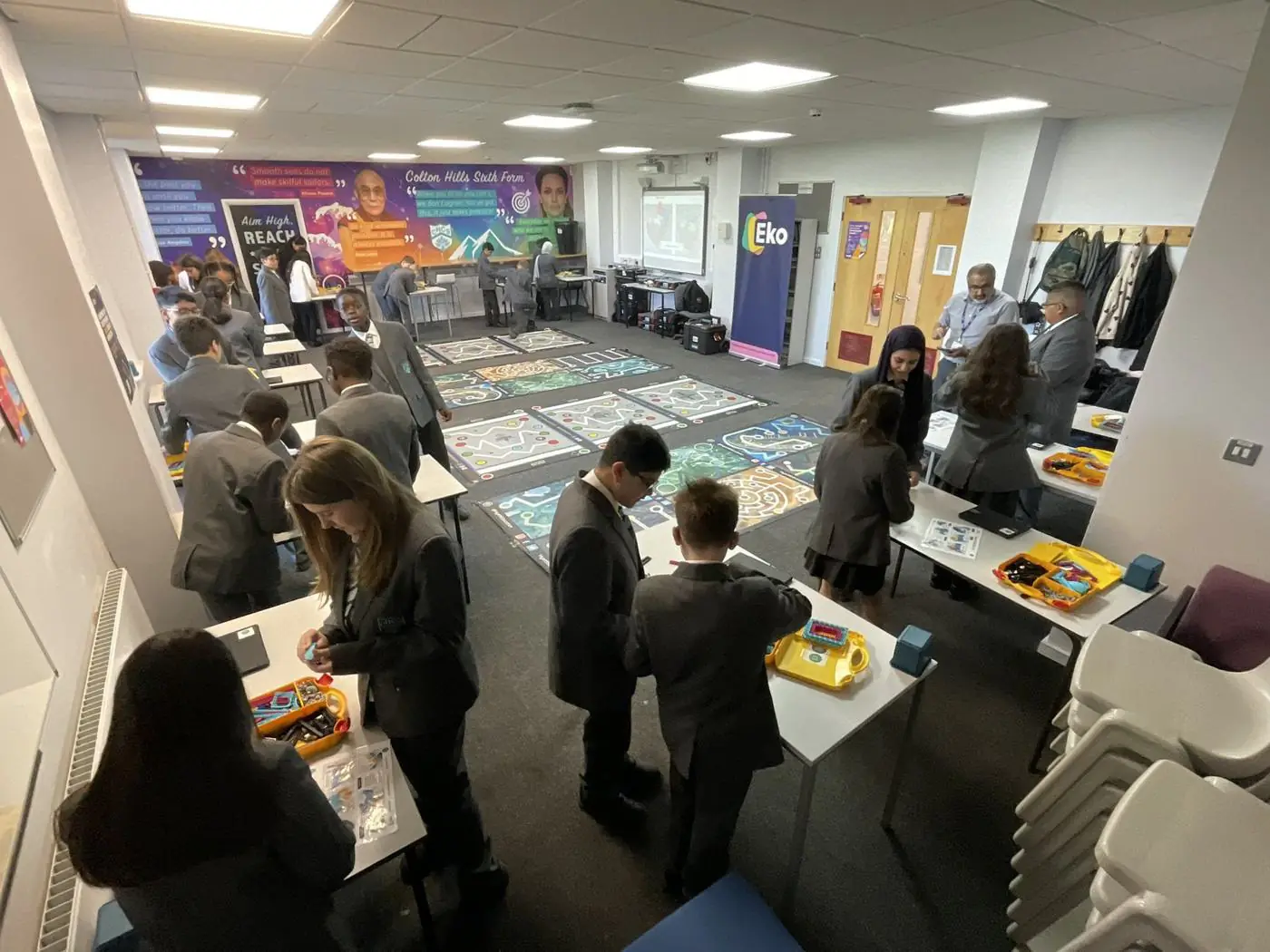
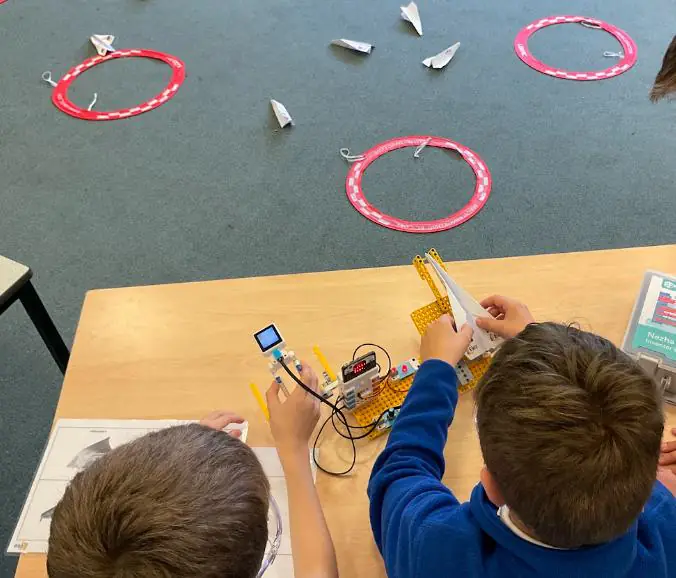
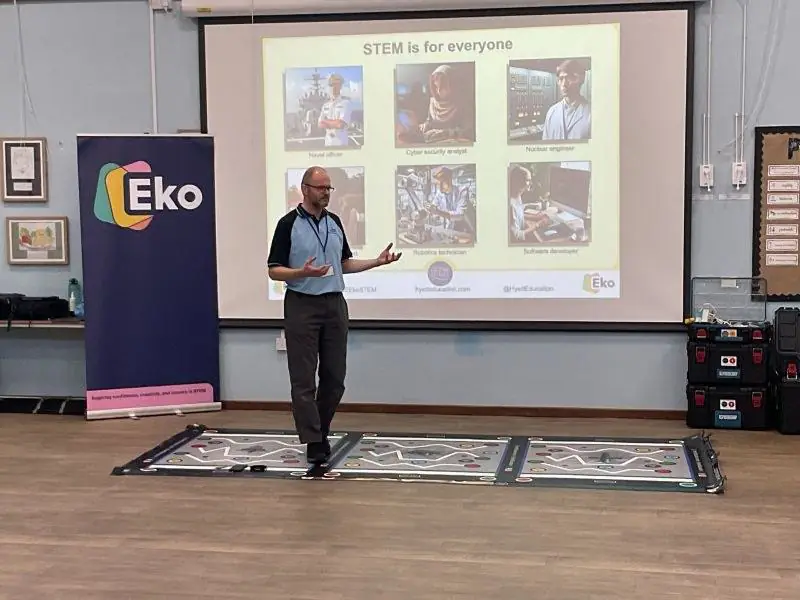
Defence-themed workshops: robotics, drones, cybersecurity, AI and 3D design
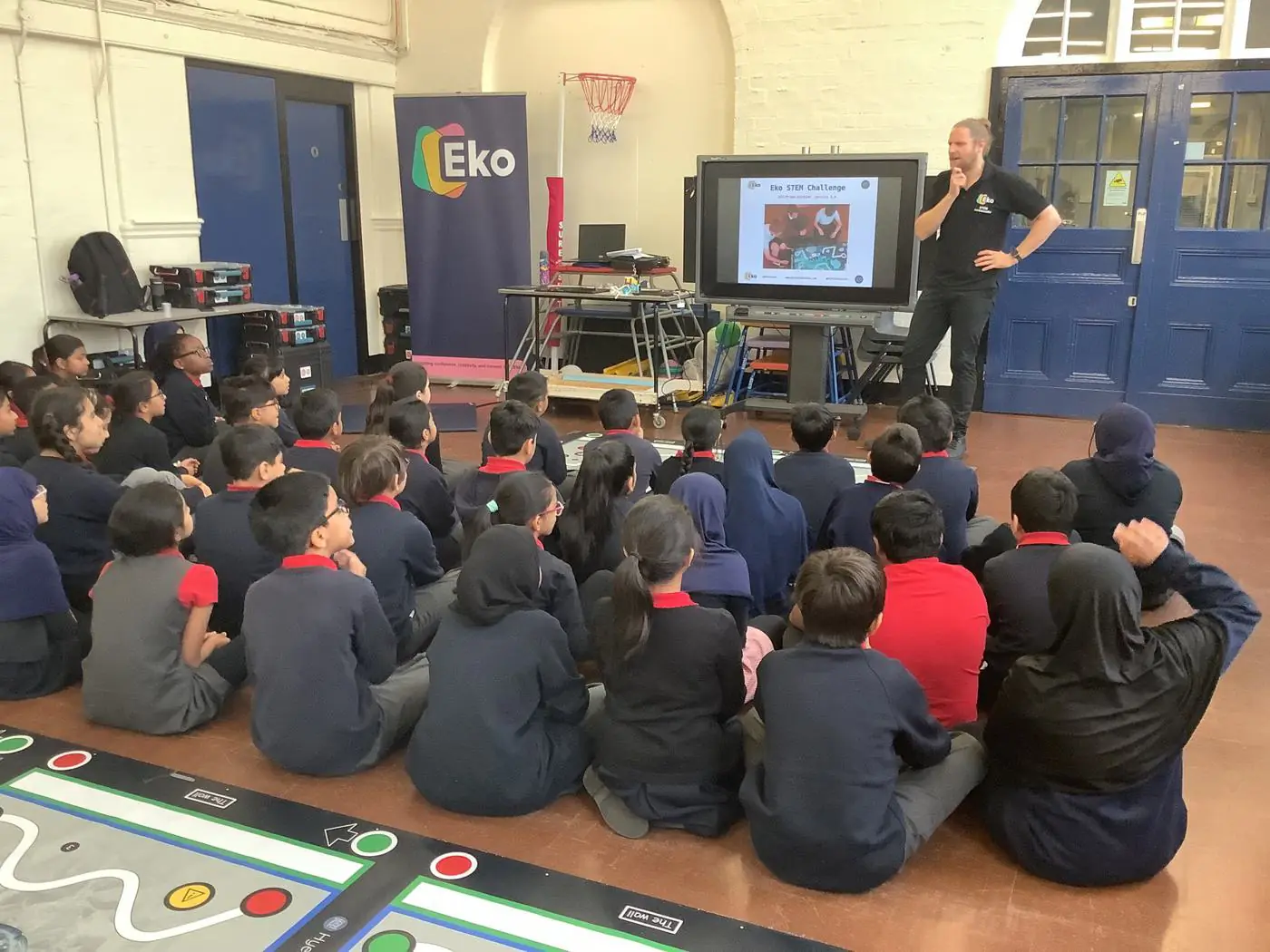
Each workshop taught core computing, engineering and design skills through a real Defence scenario, so students could see where the skills lead. Sessions ran for 90 to 120 minutes, two or three groups a day, with up to 30 students per session (40 for Key Stage 3 robotics).
Robotics and coding
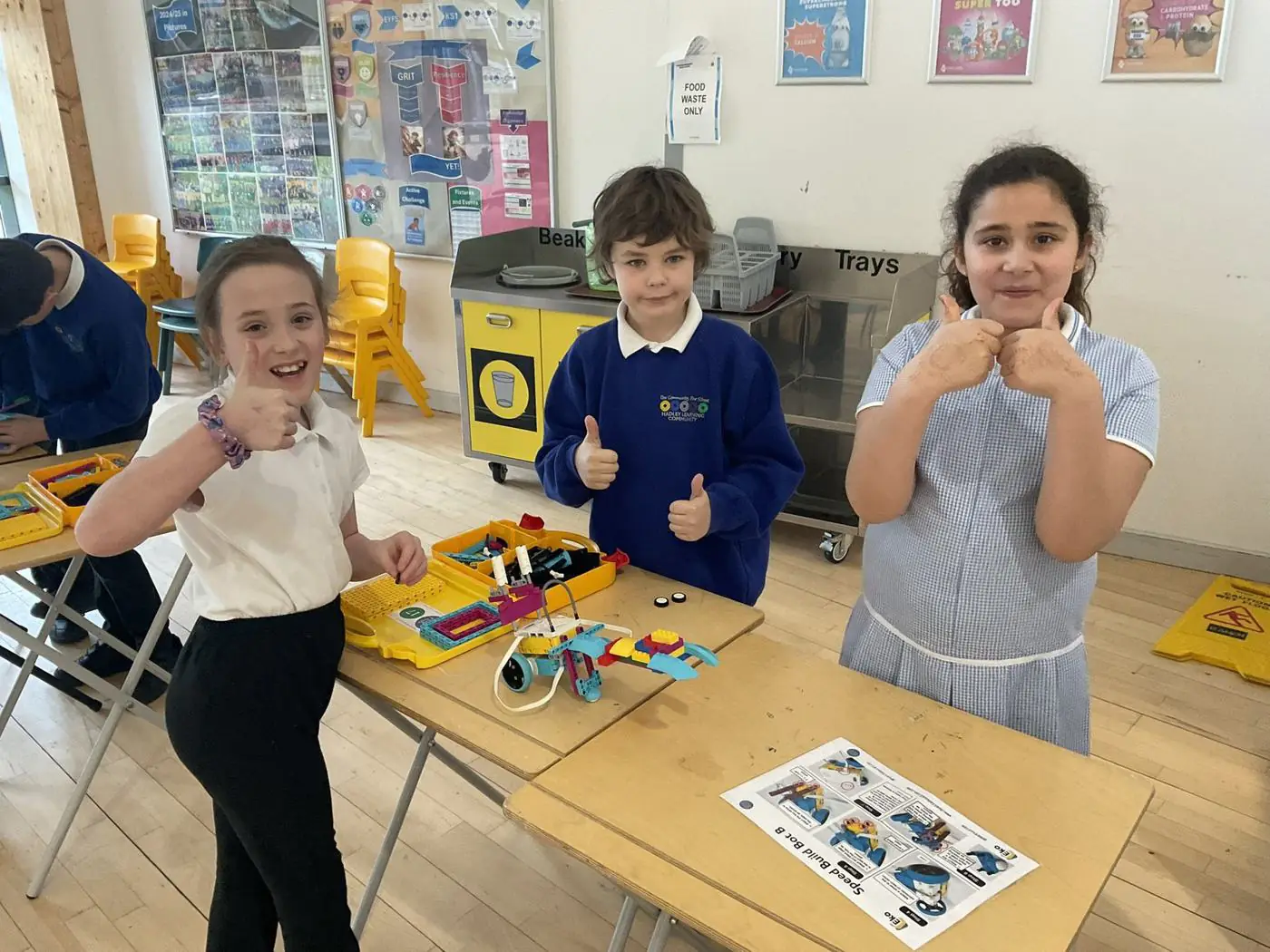
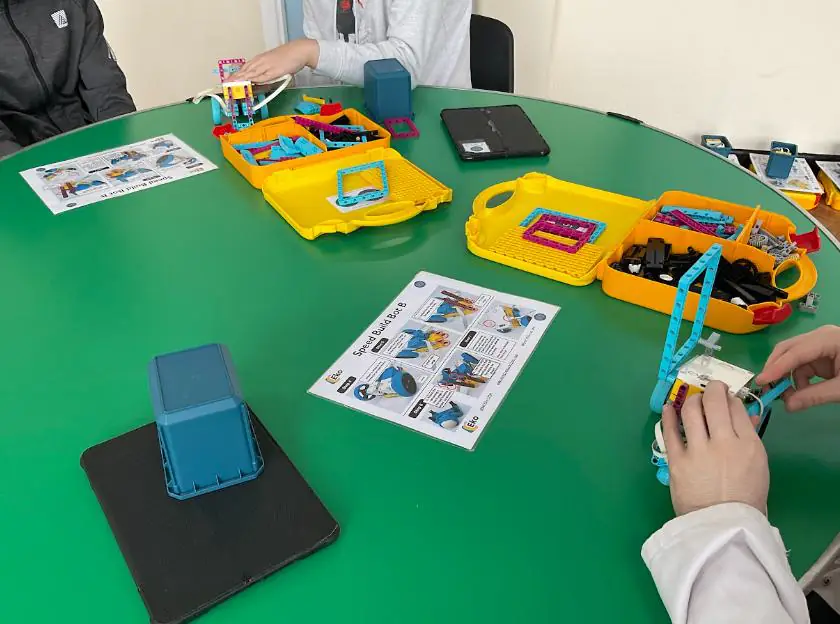
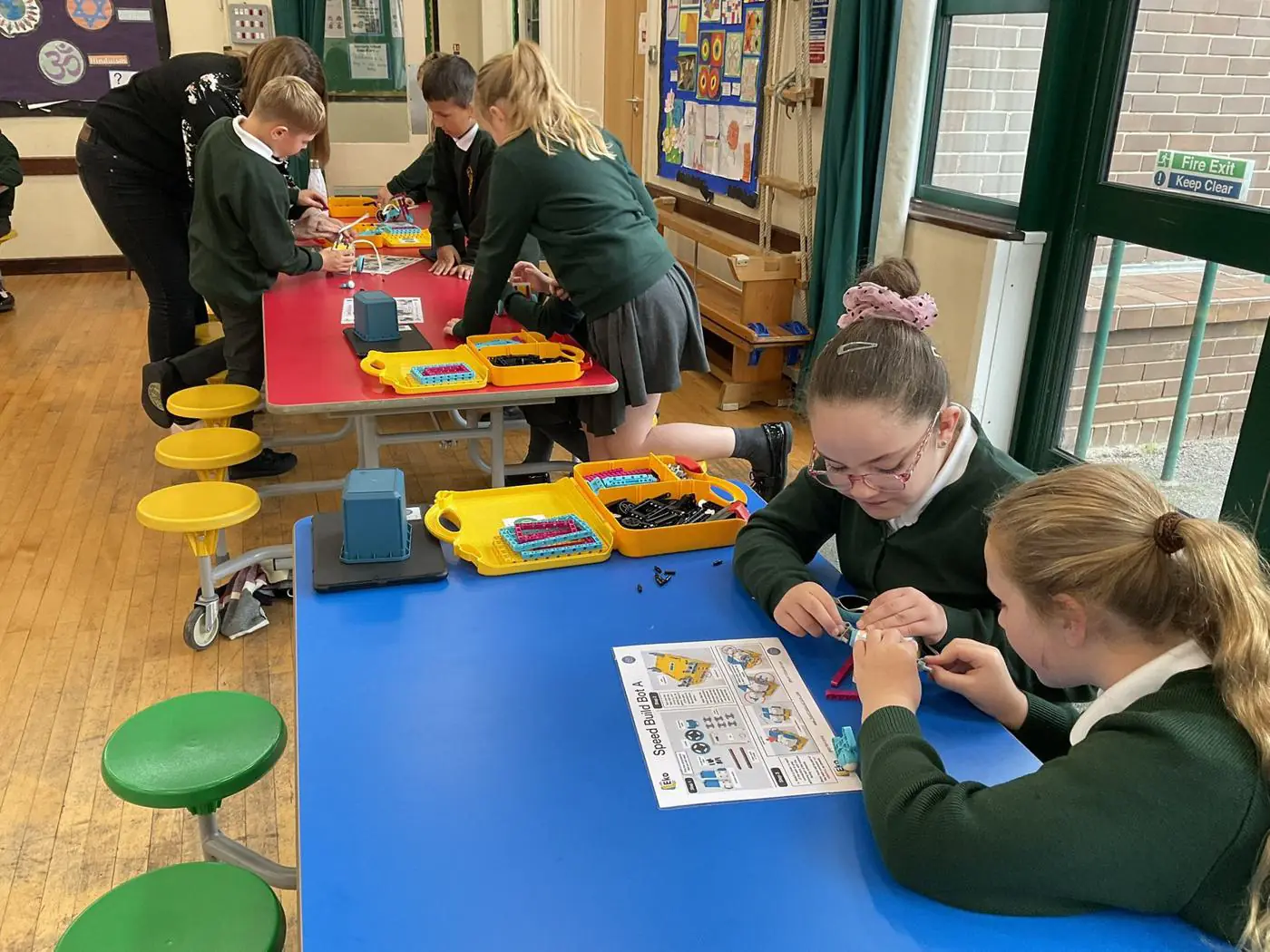
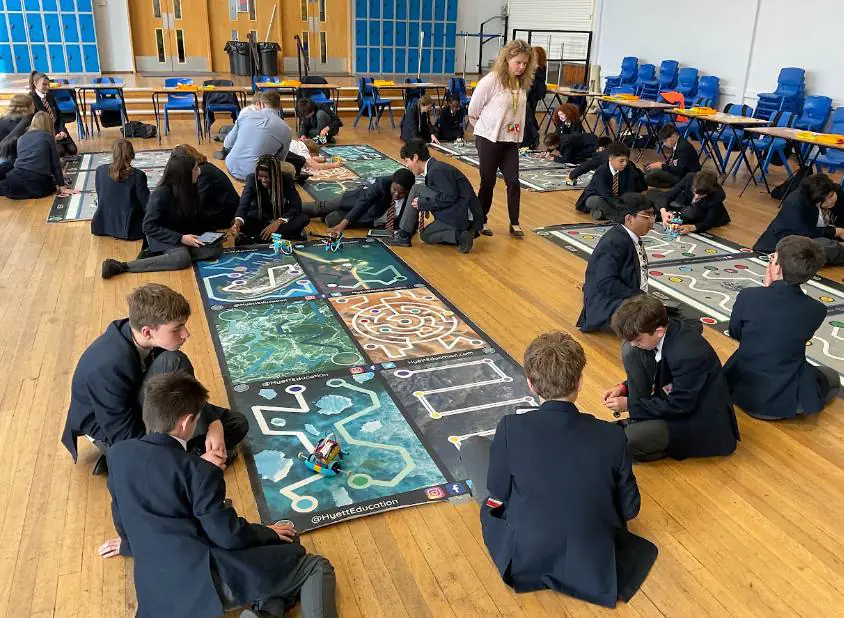
Build a robot, code it round a course, then re-engineer it for a mission such as moving a nuclear waste barrel.
Gillingham Primary School, Dorset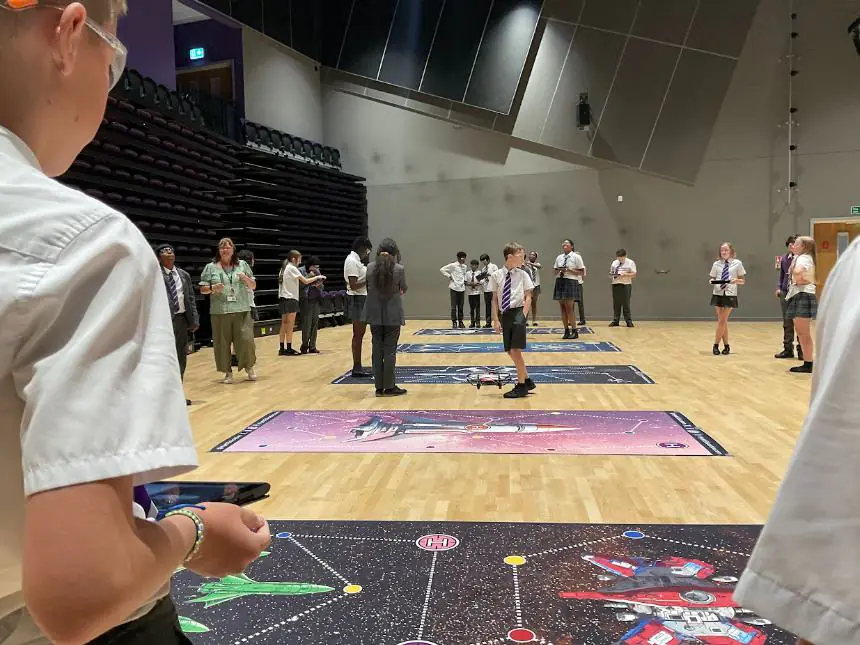
Drone coding
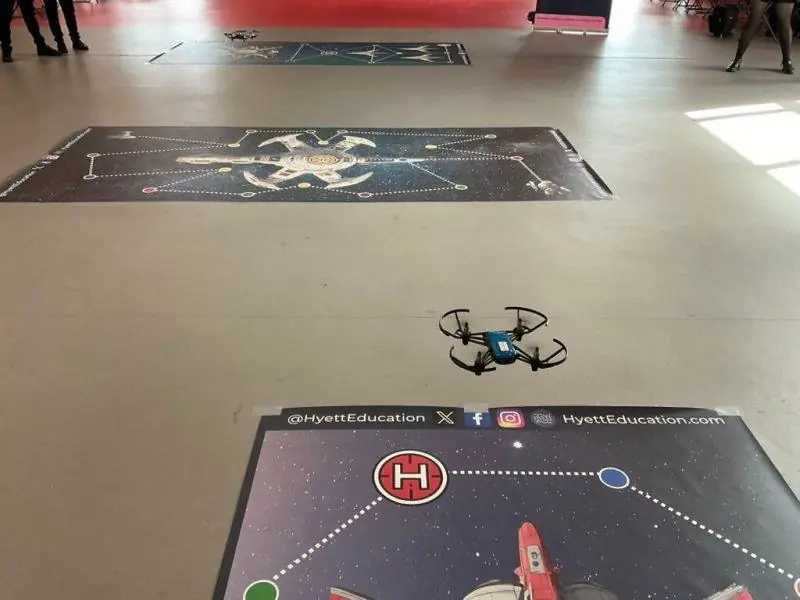
Code a flight pattern in blocks or Swift and fly it along themed routes, learning control, precision and testing.
The Deanery CE Academy, Swindon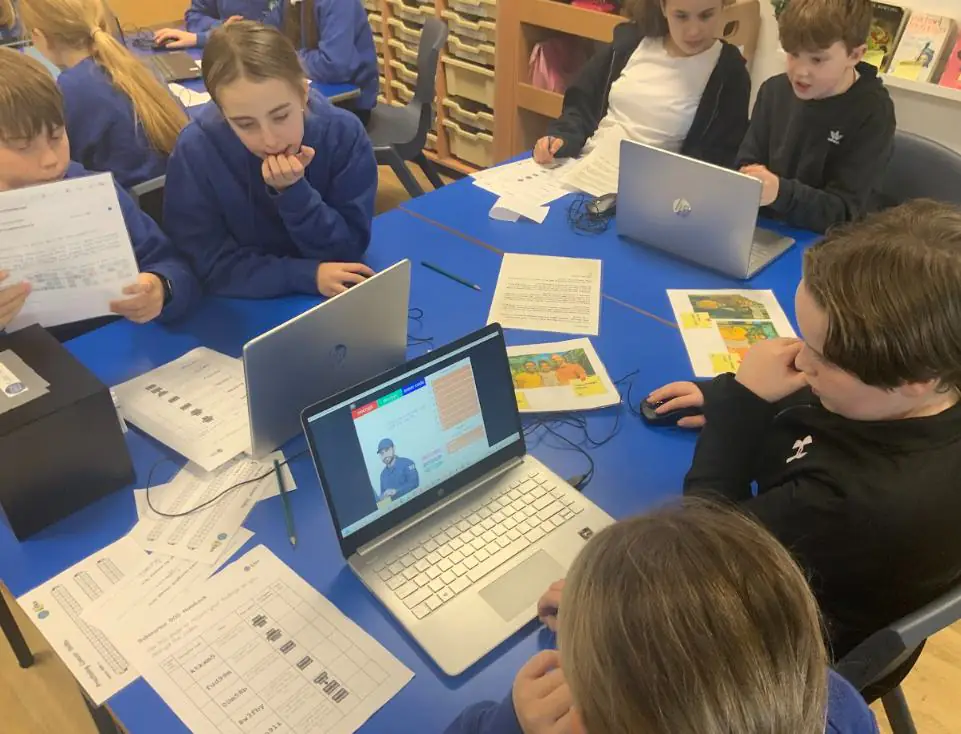
Cybersecurity
Explore the history of cryptography, encrypt messages and images in our own software, then crack a “Submarine SOS” safe as a team.
Year 6 students opening the safe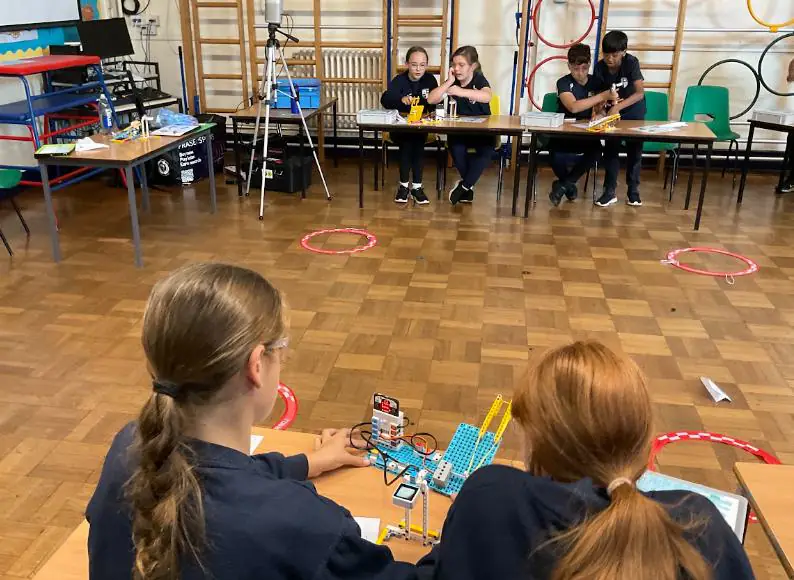
AI and machine learning
Train a vision model to identify sea-going vessels, explore confidence and false positives, and debate automated responses.
Kinson Academy, Bournemouth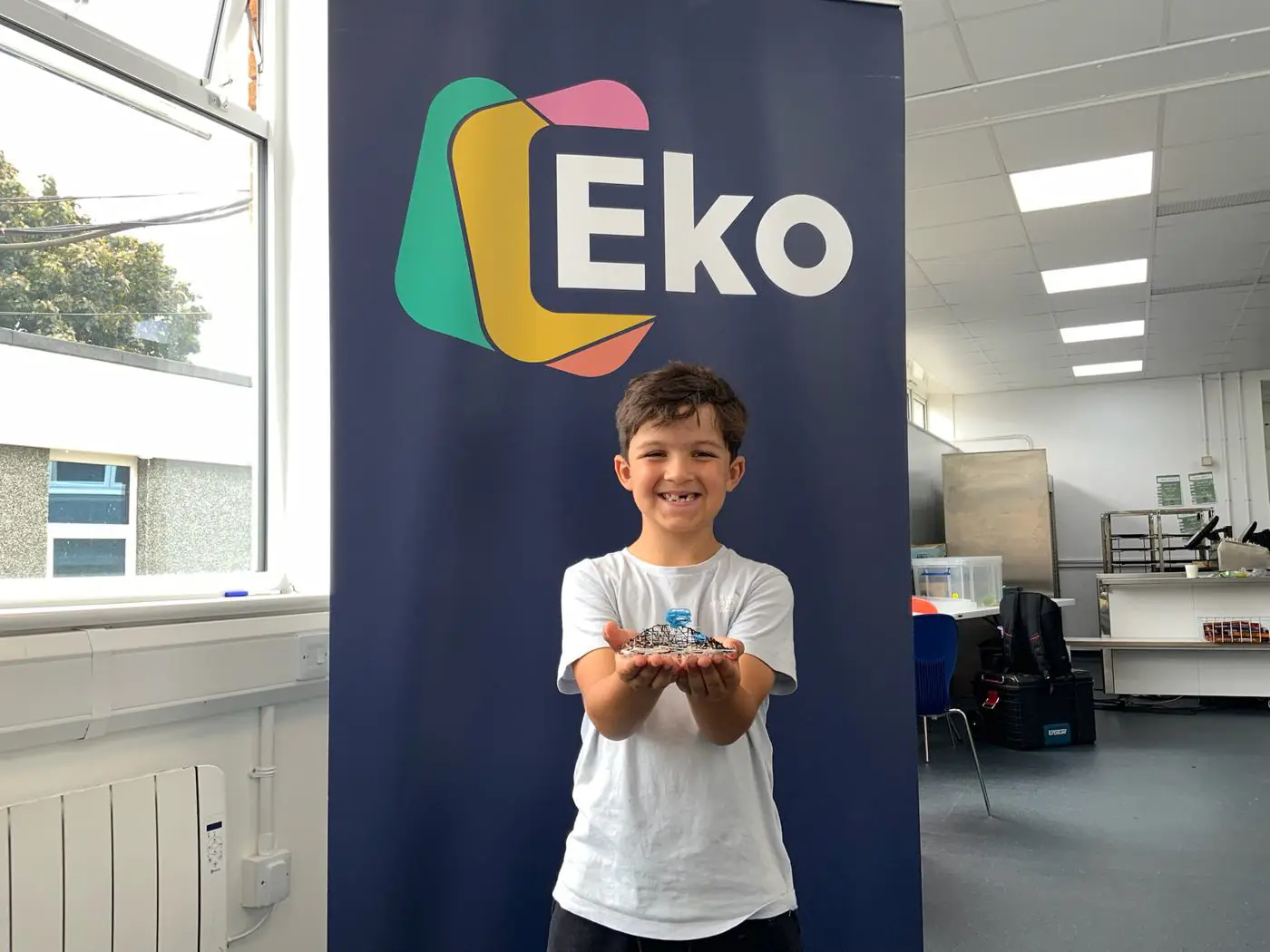
3D design
Design components in 3D modelling software and collaborate on a shared engineering challenge, from screen to 3D print.
EKO holiday club, Plymouth, summer 2025What schools chose
Delivery days by workshop, 2025/26
Beyond the classroom
Careers events and summer holiday clubs
15 STEM Ambassadors from engineering, cybersecurity and software development joined 2025/26 workshops, so students could ask people in these careers what the work is really like.
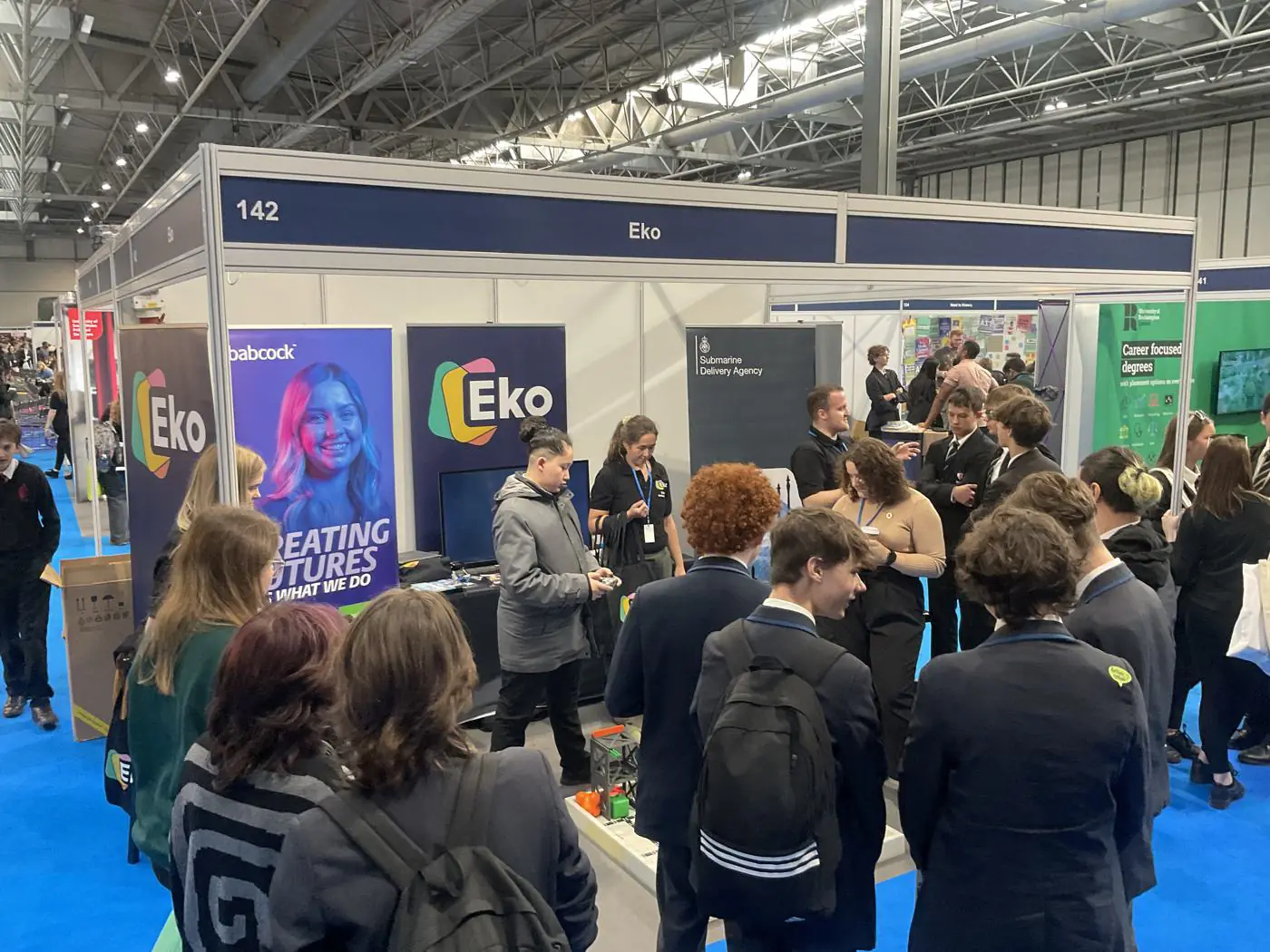
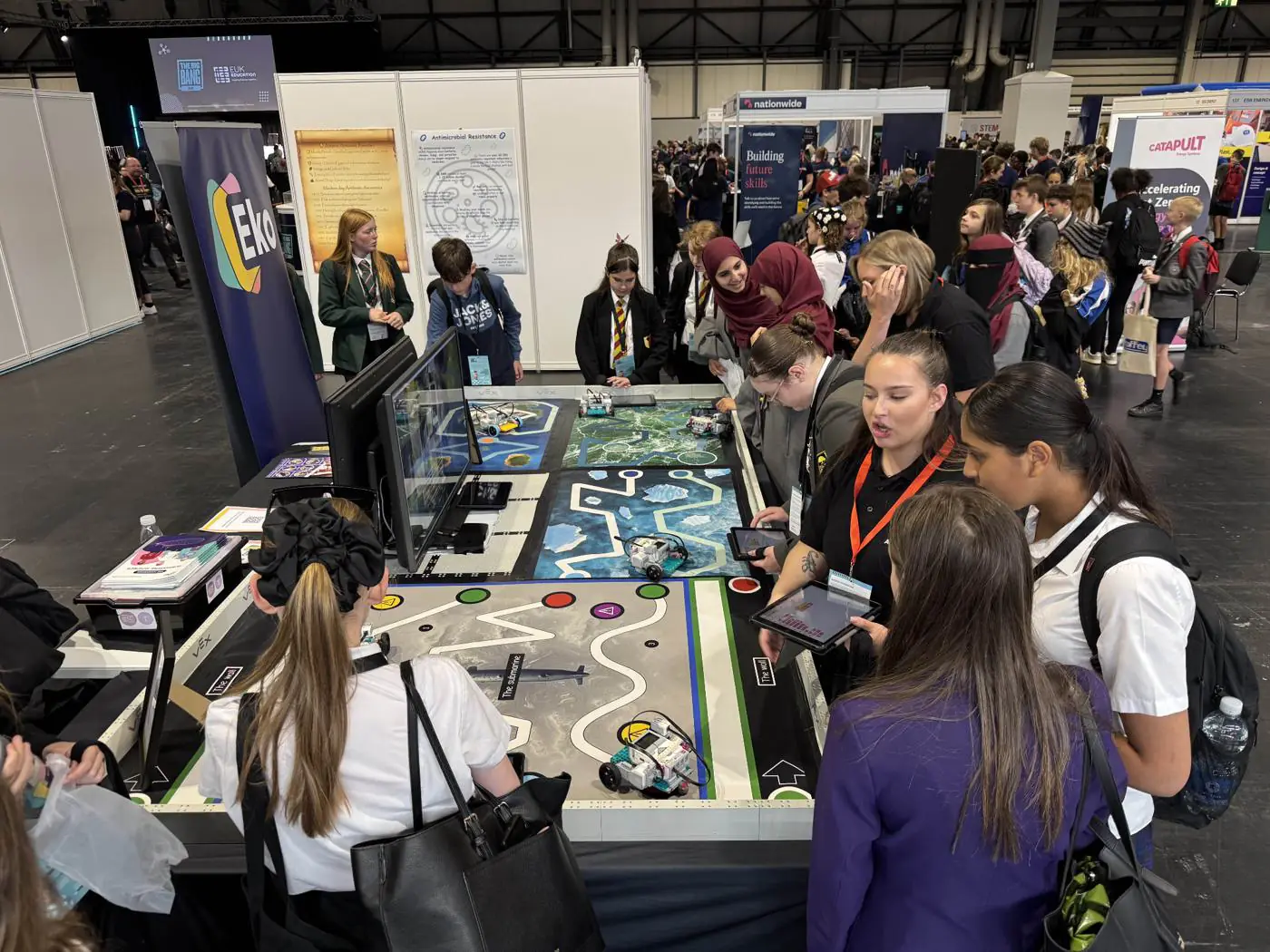
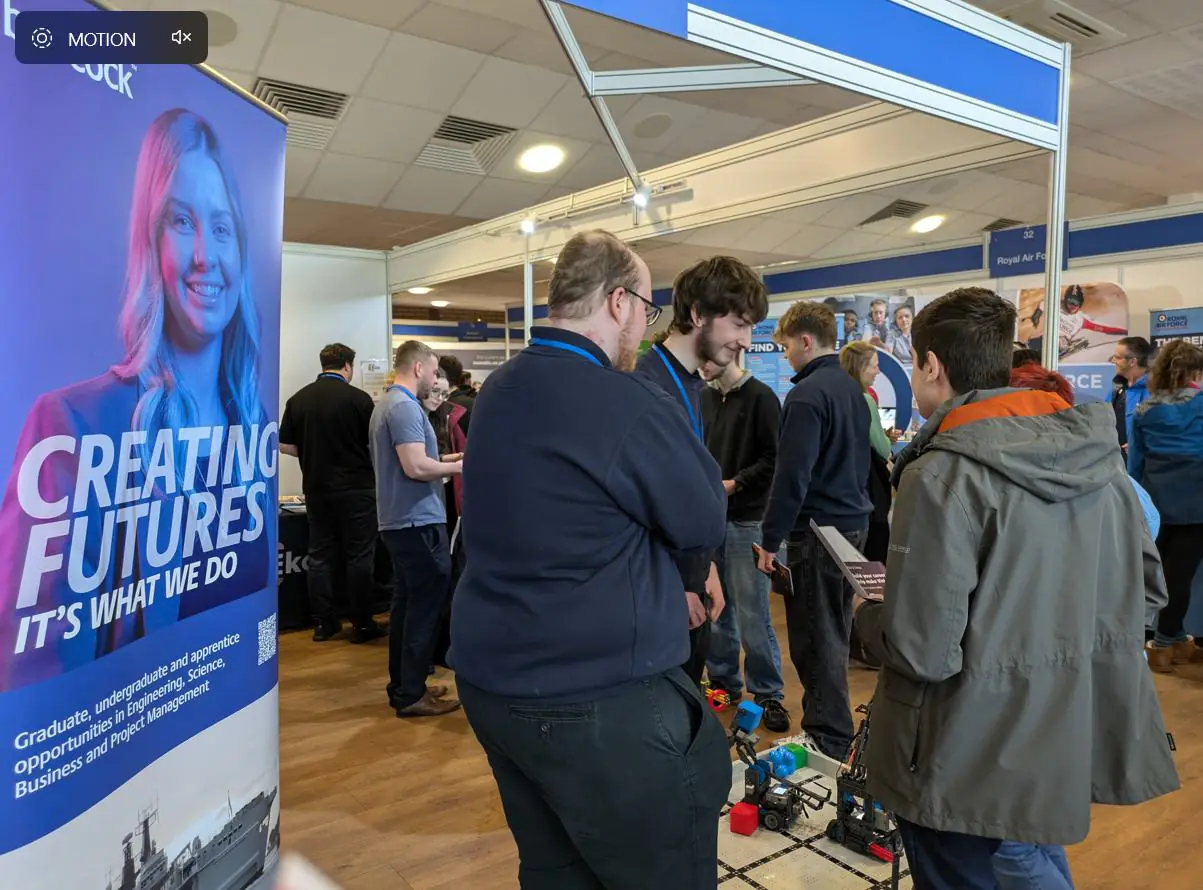
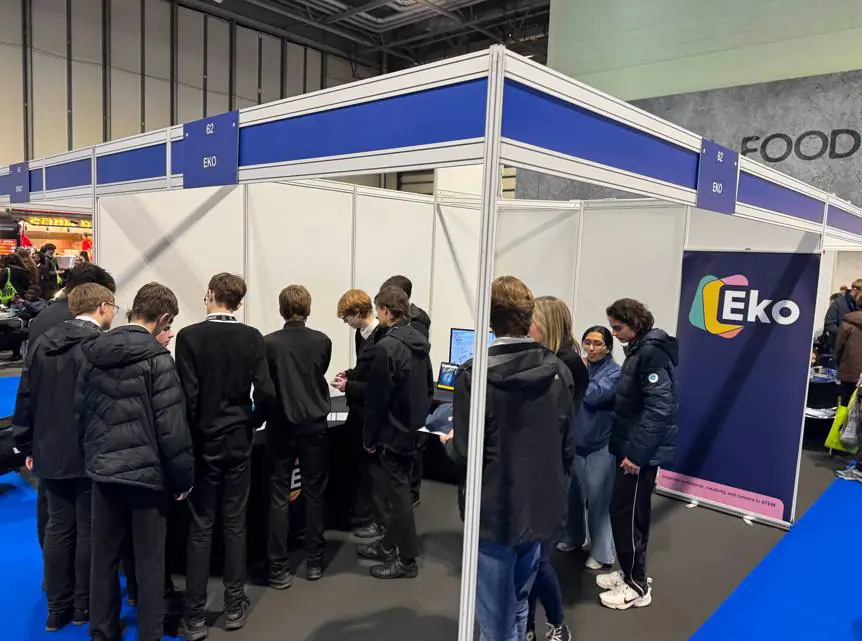
Every year we also ran the EKO stand at national careers events, alongside Defence Nuclear Enterprise partners, with robots and hands-on challenges before conversations about apprenticeship and graduate routes.
National School and College Leaver Festival · NEC, Birmingham
EKO stand with robot challenges, alongside Babcock and the Submarine Delivery Agency.
National Apprenticeship Show · Bristol
Stand shared with the Submarine Delivery Agency.
National School and College Leaver Festival · NEC, Birmingham
With a Rolls-Royce apprentice and the Submarine Delivery Agency.
National Apprenticeship Show · Sandy Park, Exeter
With Rolls-Royce, the Submarine Delivery Agency and Babcock STEM Ambassadors.
The Big Bang Fair · NEC, Birmingham
A central EKO stand where students completed a challenge to earn an EKO bag: 1,000+ students a day across three days.
National School and College Leaver Festival and Graduate Festival · NEC
Two stands: hands-on challenges for school students and in-depth conversations with graduates.
National Apprenticeship Show · Coventry
Part of 500+ student engagements in 2025/26, alongside Babcock and the Submarine Delivery Agency.
In summer 2025 EKO funded two free STEM holiday clubs near Defence Nuclear sites, for young people aged 8 to 14. We ran both end to end: venues, recruitment, staffing, catering and the full activity programme.
Reaching the families who would benefit most. We secured Stoke Damerel College in Plymouth and Victoria Academy in Barrow-in-Furness, offered places to the host schools’ pupils first, then phoned 56 local primary, secondary and special schools, starting in the most deprived neighbourhoods. Recruitment opened on 24 June 2025, five weeks before the first club, and 139 families still applied for places for 174 children. Every girl who applied was offered a place.
What a day looked like. Designing a submarine in TinkerCad, viewing it in virtual reality and 3D-printing the winning design; 3D doodler pens (the students’ favourite); robotics, drones, AI and cybersecurity; rockets, circuits and stop-motion; outdoor games, free meals every day and an EKO goody bag to take home.
What families told us
80 parent and 100 student feedback forms
Likely to choose STEM for fun rose from 64% to 88%. Source: EKO holiday club feedback forms, summer 2025.
Favourite activities
Mentions in 94 students’ written answers
“This is such a great experience and something different to the usual holiday clubs… and the added bonus is the amazing funding offering a summer holiday club for free.”
“[She] said she wasn’t expecting to enjoy it as much as she has, and that she definitely wants to be a scientist now!”
“The technology aspects, coding drones etc… has really enthused them as well as expanded their views and understanding of STEM careers.”
Show more family quotes
“My son was very nervous and tearful when arriving but the team were fantastic in calming him down and integrating him into the day.”
“[Our facilitator] was really friendly, supportive and welcoming and recognised my children by name after only meeting them once. Overall, organisation and communication prior to the event was also exceptional.”
“All 3 kids had the best week, most holiday clubs they have to be dragged to but they were excited to attend and came out smiling every day!”
“The teachers are nice and it’s a fun club for anyone who likes and wants to work in STEM.”
Accountability
How we evaluated and reported to the funder
A funded programme has to prove its value. We built the evidence into delivery from the first day.
- Quarterly evaluation reports and review meetings, tracking bookings, delivery and targets.
- A school-by-school register with dates, workshops, attendance and demographic data.
- Pre- and post-session student surveys and on-the-day teacher feedback: 3,489 student and 350 teacher forms since October 2024.
- A written evaluation after every careers event.
- Photography and consent handled to the Defence Nuclear Enterprise’s permissions process.
- End-of-year reports aligned to the Strategic Defence Review and the Defence Investment Plan.
What we learned, and what we changed
- Classroom-sized versions of Robotics, Cybersecurity and AI when halls were unavailable, so every booked school could go ahead whatever the space.
- AI and Cybersecurity extended down to Year 4 after strong results with Years 5 and 6.
- Less up-front talk and earlier building, which consistently produced the best sessions.
- We now book secondary schools with a built-in margin above any required share, so a late cancellation cannot affect it.
- Future programmes will leave each school with follow-up activities and teacher guidance.
What we learned, and what we changed
- Classroom-sized versions of Robotics, Cybersecurity and AI when halls were unavailable, so every booked school could go ahead whatever the space.
- AI and Cybersecurity extended down to Year 4 after strong results with Years 5 and 6.
- Less up-front talk and earlier building, which consistently produced the best sessions.
- We now book secondary schools with a built-in margin above any required share, so a late cancellation cannot affect it.
- Future programmes will leave each school with follow-up activities and teacher guidance.
In their words
What schools and students said
“Your expertise and funded support make a real difference in broadening our students’ horizons and ensuring STEM feels both achievable and inspiring.”
“Having the workshops fully funded helps schools greatly, by providing free opportunities for students, especially our disadvantaged students.”
“I love coding already so this experience was PERFECT. I might even consider robotics engineering as a job!”
“The workshop suited both boys and girls of all ages. The sessions really made some students think about new or different career options.”
“I think I will work in cybersecurity when I am older!”
“The children were fully engaged for the entire hour and didn’t want to stop the session. A very well executed workshop.”
Show more quotes
“The workshop was incredible, the leader knew exactly what he was talking about and was able to explain this so clearly and simply to the children and staff.”
“The facilitator was engaging, worked at a perfect pace which allowed the children to experiment but also not get bored and restless.”
“I liked how the workshop tested and challenged us to do things we probably wouldn’t have tried before and how it gave us ideas about our future career.”
“It was very fun and cool to learn how to program stuff. I felt very included and I would definitely do this again.”
“A brilliant morning thank you. The students were fully engaged and involved!”
For funders and partners
Running a funded STEM programme for your organisation
Whether you are a Defence or engineering employer, a company with a CSR or social value commitment, or a foundation funding STEM in schools, anywhere in the UK, this is what we take off your hands.
- Scoping callYour audience, regions, targets, sector theme and reporting needs.
- Written proposalTargets, workshop menu, evaluation and reporting plan, and social value mapping.
- Set-upSector-themed workshops, survey design, volunteer briefing and data agreement.
- School recruitmentWe find and book every school. On EKO in 2025/26, 107 of 120 were booked within the first term.
- Delivery and quarterly reportingBookings, delivery, targets and reach, reported every quarter.
- End-of-programme reportOutcomes, student and teacher voices, and what we would change next time.
Plan a programme
Tell us who you want to reach
We will come back with how we would recruit the schools, design the workshops and report the impact. No obligation, and no cost to scope.
Want workshops like these in your school?
EKO places have closed, but other funded and paid options are open to schools across the UK.
FAQ
Frequently asked questions
Hyett Education, a UK STEM workshop provider, delivered Defence Nuclear Enterprise EKO school workshops from 2023 to 2026, reaching 27,307 students over 301 delivery days. In 2025/26, students who could see themselves in a STEM career rose from 58.2% to 80%, and those likely to take part in more STEM rose from 59.4% to 76.4%. Figures come from reports submitted to the funder.
What is the EKO programme?+
EKO (Engagement, Knowledge and Opportunities) is the Ministry of Defence’s Defence Nuclear Enterprise programme to build young people’s confidence, creativity and interest in STEM careers. Hyett Education delivered EKO school workshops from a 2023 pilot to July 2026: 27,307 students over 301 delivery days in the Midlands, the North of England and the South West.
Did the programme meet its targets?+
Yes, and ahead of schedule. Every contracted day was delivered in every year of the programme, finishing about three months early in 2023/24 and five months early in 2024/25. In 2025/26, 107 of 120 schools were booked by the end of November, all 120 contracted days were delivered plus one bonus day, 2,239 students came from designated high-priority areas, and the 30% secondary-school requirement was met in both regions.
How much does a funded STEM programme cost?+
It depends on the number of delivery days, regions, workshop mix, school recruitment, events and reporting you need, so we cost each programme from a written scope rather than a fixed package. When a funder covers the day, schools pay nothing. Send us your audience, regions and timescale and we will return a costed proposal.
Where in the UK can you deliver a funded programme?+
Anywhere in the UK. We plan every programme around the regions, towns and priority areas you want to reach, whether that is one area or several at once. Our EKO work alone covered the Midlands, the North of England and the South West, with holiday clubs in Plymouth and Barrow-in-Furness and careers events in Birmingham, Bristol, Exeter and Coventry.
How do you keep pupils safe?+
Every Hyett Education facilitator holds an enhanced DBS certificate and is registered on the DBS Update Service, and certificate details are provided to schools on request before a booking. We supply the activity risk assessment and hold £10m public liability insurance. Photography on EKO followed the Defence Nuclear Enterprise’s consent process.
How do you evidence impact for funders?+
Students complete surveys before and after each session and teachers give feedback on the day: 3,489 student and 350 teacher forms since October 2024. Funders receive quarterly reports, a school-by-school register with demographics, and an end-of-year report with outcomes, voices and lessons learned.
Can our staff volunteer in the sessions?+
Yes. 15 STEM Ambassadors from engineering, cybersecurity and software development joined EKO workshops, and partner apprentices and engineers joined our careers-event stands. We brief volunteers and build their role into the session plan, so it is meaningful for them and for students.
Can a programme target disadvantaged or under-represented students?+
Yes. We track reach from the first booking. In 2025/26, 41.4% of EKO students were eligible for free school meals, 49.9% were girls, 29.7% were from ethnic minority backgrounds and 22.2% had special educational needs or disabilities.
Can you run holiday clubs and events as well as school workshops?+
Yes. In summer 2025 we ran two free EKO holiday clubs for 134 young people aged 8 to 14 in Plymouth and Barrow-in-Furness, and every parent who gave feedback would recommend them. We also ran the EKO stand at The Big Bang Fair, National Apprenticeship Shows and the National School and College Leaver Festival.
Are EKO-funded workshops available now?+
This case study describes completed delivery. Current funded availability is confirmed for each opportunity. Schools can register interest on our funded workshops page or get an Instant Quote, and organisations can ask us to scope a programme of their own.
Planning a STEM programme for schools?
Tell us who you want to reach and where. We will show you how we would recruit the schools, design the workshops and report the impact.